.png?width=160&height=46&name=FMC%20logo%20(6).png "FMC logo")



Customer relationship management has evolved far beyond simple contact databases and manual workflows. In 2025, businesses are witnessing a fundamental transformation in how CRM systems operate, driven by the emergence of agentic AI—intelligent systems that don't just store data but actively work to improve customer relationships, automate complex tasks, and drive revenue growth.
The traditional CRM model is becoming obsolete. For decades, these systems served primarily as digital filing cabinets—useful for storing customer information but requiring constant human intervention to extract value. Sales representatives spent hours updating records, marketing teams manually segmented audiences, and customer service agents toggled between multiple screens to find relevant information. This reactive, labor-intensive approach created bottlenecks that limited growth and frustrated both employees and customers.
Today's business environment demands something radically different. Customers expect instant responses, personalized experiences, and seamless interactions across every touchpoint. Competition is fiercer than ever, with new entrants leveraging technology to disrupt established markets. The companies winning in this landscape aren't just using better tools—they're fundamentally rethinking how technology and human expertise combine to create value.
According to industry research, 41% of organizations are already investing in AI agents, recognizing their value in case management and service operations where flexibility and responsiveness are critical. Early adopters are seeing 20% to 30% faster workflow cycles and significant reductions in operational costs. Perhaps more importantly, they're discovering that agentic AI doesn't just make existing processes more efficient—it enables entirely new ways of engaging customers and operating businesses.
The shift toward agentic AI in CRM represents a move from systems that require constant feeding and care to intelligent partners that proactively identify opportunities, solve problems, and drive outcomes. It's the difference between a tool that helps you work and a system that works alongside you.
This article explores what agentic AI means for CRM systems, why your business needs it, and how to successfully implement this transformative technology. We'll examine real-world applications, analyze the leading platforms, discuss the critical role of migration and integration, and provide a practical roadmap for getting started.
What Is Agentic AI?
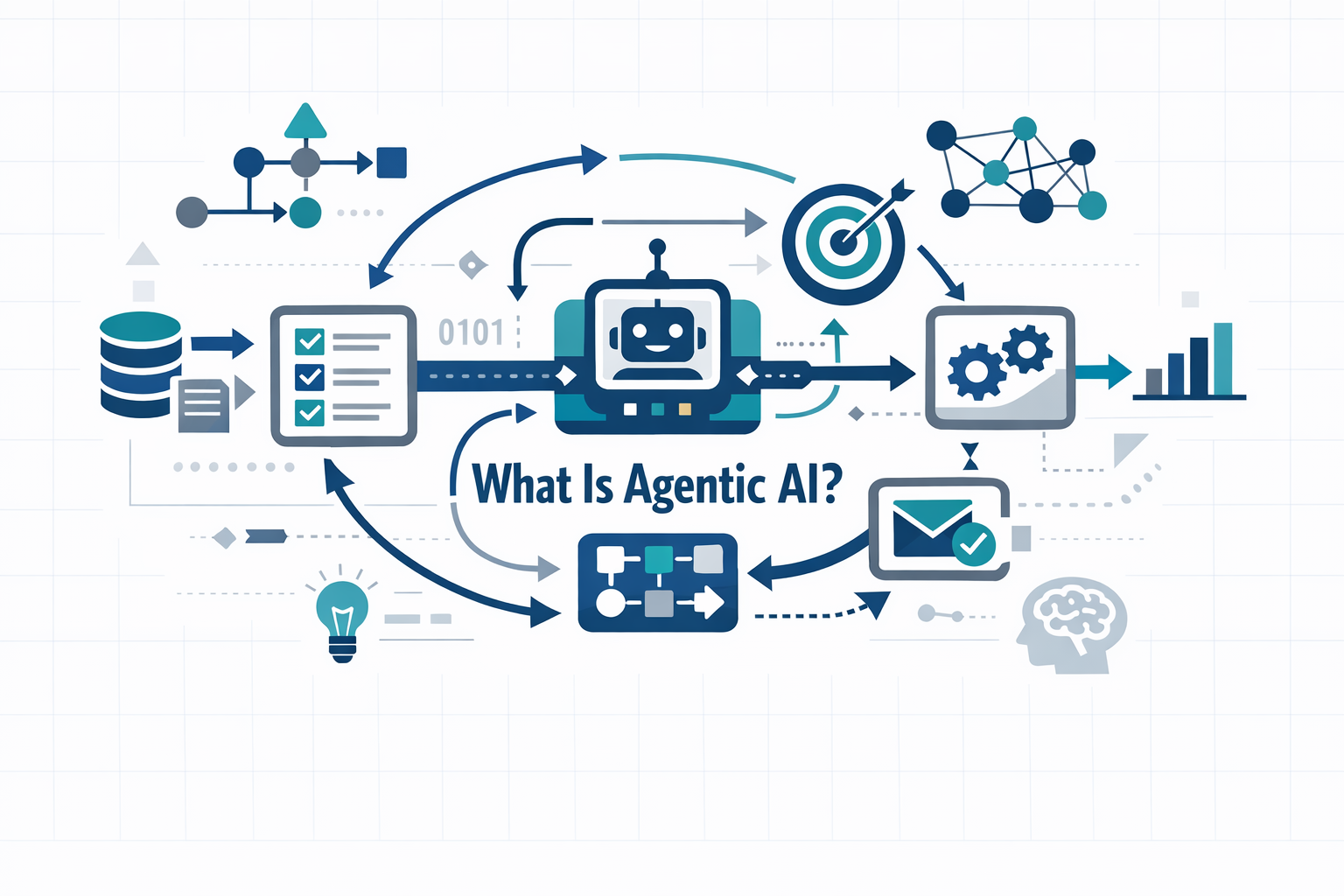
Agentic AI refers to intelligent, autonomous AI systems that can independently perform tasks, make decisions, and coordinate workflows while continuously learning from data and context. Unlike traditional automation that simply follows pre-defined rules, agentic AI brings reasoning, adaptability, and decision-making capabilities to business processes.
To understand the significance of this shift, it's helpful to contrast agentic AI with previous generations of automation technology:
The Evolution from Automation to Intelligence
Traditional Automation (Rules-Based): Early business automation relied on rigid if-then rules. If a lead fills out a form, then send a confirmation email. These systems were brittle, requiring manual updates whenever business conditions changed, and incapable of handling exceptions or novel situations.
Predictive AI (Pattern Recognition): The next wave brought machine learning models that could identify patterns and make predictions. These systems could forecast sales, recommend products, or score leads based on historical data. However, they still required humans to interpret insights and take action.
Agentic AI (Autonomous Decision-Making): Today's agentic systems go beyond prediction to action. They don't just identify high-value leads—they automatically engage them with personalized outreach, schedule meetings, update records, and coordinate handoffs between teams. They understand context, adapt to changing conditions, and work toward goals rather than simply executing discrete tasks.
Key Characteristics of Agentic AI:
Autonomy: AI agents can operate independently, making decisions without constant human intervention. A customer service agent might resolve thousands of routine inquiries overnight, escalating only the complex cases that require human judgment.
Reasoning: These systems analyze data, understand context, and apply logic to solve complex problems. When a customer reports an issue, an agent doesn't just consult a knowledge base—it examines the customer's complete history, identifies relevant patterns, considers multiple solution paths, and determines the optimal approach.
Continuous Learning: Agentic AI systems adapt and improve over time based on outcomes and new information. As agents handle more customer interactions, close more deals, or resolve more support tickets, they refine their understanding of what works and become increasingly effective.
Multi-Agent Collaboration: Different AI agents can work together, coordinating tasks across departments and workflows. A sales agent might identify a promising opportunity, trigger a marketing agent to launch a targeted campaign, alert an inventory agent to ensure product availability, and notify a customer success agent to prepare for onboarding—all automatically.
Goal-Oriented Behavior: Rather than executing single commands, agentic AI works toward achieving broader business objectives. You might set a goal to "increase customer retention by 15%" and the agent will autonomously test different engagement strategies, analyze results, and optimize its approach.
Natural Language Understanding: Modern agentic AI can comprehend and generate human language, enabling it to interact with customers via chat, email, or voice, understand unstructured data like customer feedback, and communicate with team members in plain language.
Contextual Memory: Agents maintain awareness of ongoing situations and past interactions. A customer service agent remembers previous conversations, understands the current state of an issue, and knows what actions have already been attempted—providing continuity that dramatically improves customer experience.
How Agentic AI Differs from Chatbots
It's important to distinguish agentic AI from simpler chatbot technologies. While both use natural language processing, chatbots typically follow scripted conversation flows and hand off to humans when they encounter anything unexpected. Agentic AI systems have the autonomy to take actions across multiple systems, the reasoning ability to solve complex problems, and the contextual understanding to adapt their behavior based on the specific situation.
A chatbot might help a customer track a package. An agentic AI system proactively identifies that a shipment is delayed, automatically rebooks it on a faster carrier, notifies the customer with updated delivery information, applies a goodwill discount to their next order, and updates internal forecasts to account for the supply chain issue—all without human intervention.
In the context of CRM, agentic AI transforms platforms from passive data repositories into active business engines that drive customer engagement, optimize sales processes, and deliver personalized experiences at scale. The system becomes a tireless team member that works 24/7, never forgets a task, and constantly improves its performance based on results.
How Agentic AI Transforms CRM Systems
Traditional CRM systems require significant manual input—data entry, lead qualification, follow-ups, and reporting. Agentic AI fundamentally changes this dynamic by introducing intelligent automation that goes far beyond simple task execution.
From Static to Dynamic Systems
Legacy CRM platforms often rely heavily on manual data entry and are difficult to adapt as businesses grow. They're designed primarily for reporting rather than enabling real-time action. Sales representatives spend an estimated 17% to 23% of their time on data entry and administrative tasks—time that could be spent building relationships and closing deals.
Modern agentic CRM systems, by contrast, become dynamic ecosystems that analyze data and make decisions without human intervention, optimizing and adapting instantaneously. When a prospect visits your website, an agentic system doesn't just log the visit—it analyzes the pages viewed, compares behavior to patterns of high-converting leads, adjusts the lead score, triggers personalized follow-up content, and potentially schedules an outreach task for a sales representative, all in real-time.
Intelligent Workflow Orchestration
Agentic AI enables sophisticated workflow automation across the entire customer lifecycle. Instead of waiting for human input at every stage, AI agents can:
Lead Management and Qualification: Automatically qualify and score leads based on firmographic data (company size, industry, location), technographic data (technology stack being used), and intent signals (content consumed, website behavior, email engagement). The system continuously re-evaluates leads as new information becomes available, ensuring sales teams always focus on the hottest opportunities.
Personalized Multi-Channel Outreach: Create and send personalized emails, social media messages, and other communications based on prospect behavior and preferences. An agent might notice that a prospect downloaded a whitepaper about a specific feature, then automatically send a case study showing how similar companies benefited from that feature, followed by an invitation to a relevant webinar.
Meeting Coordination: Schedule meetings and coordinate handoffs between teams without the back-and-forth of email chains. When a lead reaches a certain score, the agent can automatically check calendars, propose meeting times, send invitations, add participants, and create preparation materials for the sales representative.
Real-Time Data Enrichment: Update CRM records in real-time based on customer interactions across all channels. If a customer mentions they're opening a new office location during a support call, the agent captures this information, updates the account record, alerts the account manager, and potentially triggers a conversation about additional products or services needed for the expansion.
Intelligent Routing and Escalation: Route support tickets, leads, and opportunities to the appropriate teams or individuals based on skills, availability, workload, and past performance. The system learns over time which representatives are most effective with specific types of customers or issues, optimizing assignments for the best outcomes.
Automated Procurement and Inventory: Trigger procurement flows and inventory adjustments based on sales forecasts, current stock levels, and anticipated demand. When a major deal closes, the agent can automatically adjust inventory reserves, alert manufacturing or procurement teams, and update delivery timelines.
Proactive Customer Success: Monitor customer health scores, usage patterns, and satisfaction indicators to identify at-risk accounts before problems escalate. An agent might notice declining product usage and automatically trigger a check-in from the customer success team, or identify expansion opportunities when usage patterns suggest the customer has outgrown their current plan.
Contextual Decision-Making
What sets agentic AI apart is its ability to make contextual decisions. For example, a service agent might access a customer's complete history—purchase records, support tickets, marketing interactions, product usage data, satisfaction scores—and use that context to resolve issues, recommend products, or escalate to human representatives when necessary.
Consider a customer who contacts support about a billing question. A traditional system might simply route this to the billing department. An agentic AI system would:
- Retrieve the customer's complete history, including tenure, lifetime value, recent interactions, and satisfaction scores
- Analyze the billing issue and identify the root cause
- Check if similar customers have experienced this issue and what resolutions were effective
- Determine if the customer is at risk of churning based on behavioral signals
- Decide whether to automatically resolve the issue (perhaps with a courtesy credit), escalate to a specialist, or route to account management for a more comprehensive conversation
- Update all relevant records and trigger appropriate follow-up workflows
This level of contextual decision-making creates experiences that feel genuinely personalized and responsive, driving satisfaction and loyalty while reducing the burden on human teams.
The Shift from Reactive to Proactive
Perhaps the most significant transformation is the shift from reactive to proactive customer engagement. Traditional CRM systems respond to customer actions—they log a form submission, record a purchase, track a support ticket. Agentic systems anticipate needs and take action before customers even realize they have an issue or opportunity.
Examples of proactive engagement include:
- Identifying customers whose usage patterns suggest they're ready for an upsell and automatically initiating conversations
- Detecting early warning signs of dissatisfaction and intervening before cancellation becomes likely
- Recognizing that a customer's contract is approaching renewal and orchestrating a multi-touch engagement campaign
- Noticing that a prospect has gone silent mid-sales cycle and testing different re-engagement strategies
- Predicting which existing customers are most likely to be interested in a new product launch and prioritizing outreach accordingly
This proactive approach doesn't just improve efficiency—it fundamentally changes the customer experience and the relationships businesses build with their markets.
Key Benefits of Agentic AI in CRM
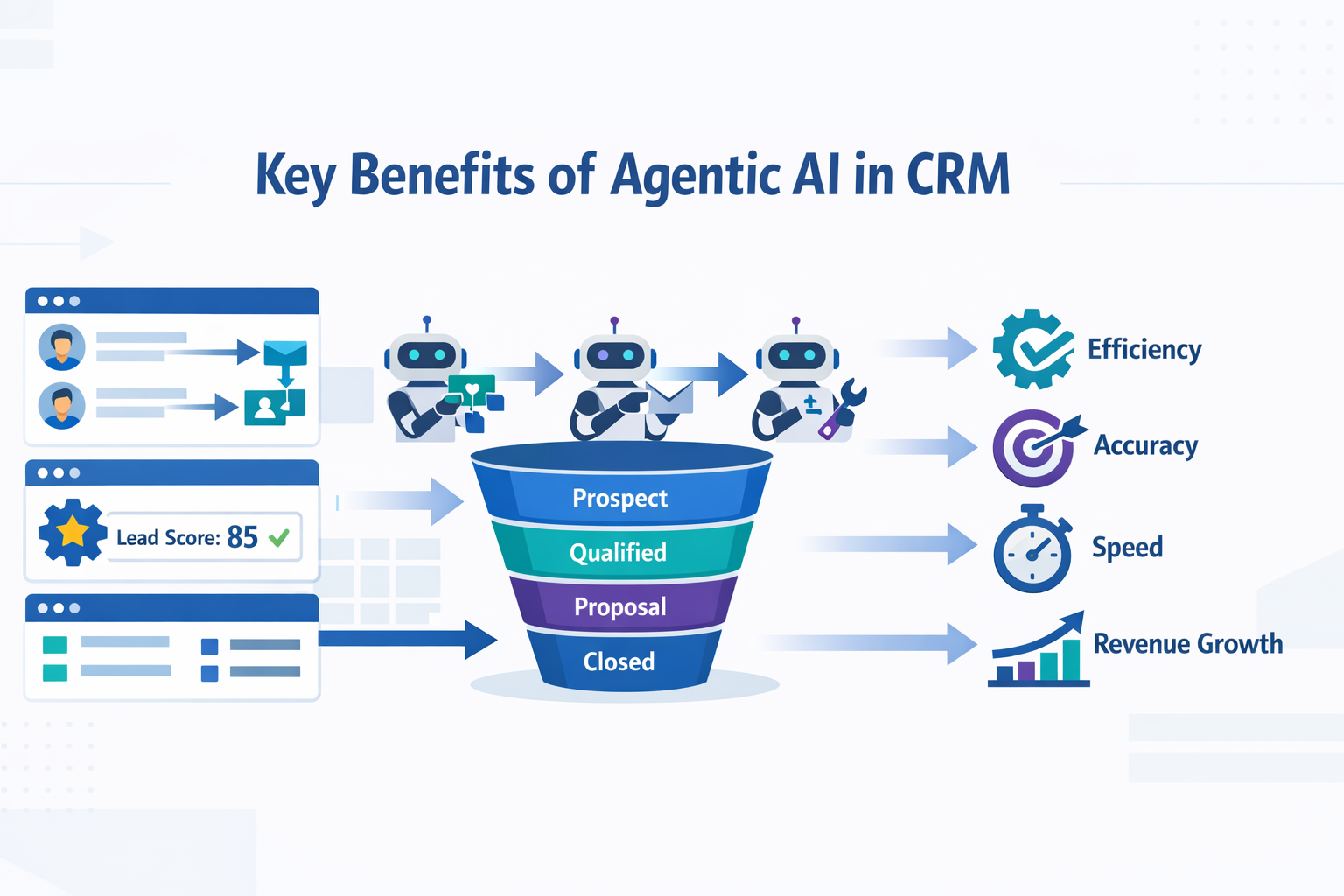
The implementation of agentic AI in CRM systems delivers measurable business value across multiple dimensions. Organizations that have embraced these technologies are reporting transformative results that go far beyond incremental improvements.
1. Dramatically Improved Efficiency
By automating repetitive tasks and optimizing workflows, businesses can reduce manual workloads by 25% to 60%. Sales teams, marketing departments, and customer service representatives can focus on high-value strategic work rather than data entry and routine follow-ups.
Specific Efficiency Gains:
- Reduced Administrative Burden: Sales representatives save 5-10 hours per week previously spent on data entry, updating records, and manual follow-ups
- Faster Response Times: Automated lead qualification and routing reduces response time from hours or days to minutes, capturing opportunities before competitors
- Streamlined Reporting: AI agents generate reports, dashboards, and analytics automatically, eliminating hours of manual compilation and analysis
- Optimized Resource Allocation: Intelligent routing ensures the right people work on the right tasks, reducing bottlenecks and improving throughput
Consider a mid-sized B2B company processing 500 leads per month. With traditional methods, sales representatives might spend 20-30 minutes on initial qualification per lead—250 hours of work. An agentic system can handle initial qualification automatically, reducing this to perhaps 5 minutes of human review per qualified lead, saving hundreds of hours monthly while improving consistency and accuracy.
2. Enhanced Customer Experience
Agentic AI enables 24/7 customer support, instant responses to inquiries, and highly personalized interactions. AI agents can analyze purchase history, browsing behavior, and previous interactions to deliver tailored recommendations and support that meets each customer's specific needs.
Customer Experience Improvements:
- Always-On Availability: Customers receive immediate assistance regardless of time zones or business hours, with AI agents handling routine inquiries and escalating complex issues to human representatives during business hours
- Consistency Across Channels: Whether customers reach out via email, chat, phone, or social media, AI agents provide consistent information and maintain conversation context across all touchpoints
- Personalization at Scale: Every customer interaction is informed by their complete history and preferences, creating experiences that feel individual even when serving thousands simultaneously
- Proactive Problem Resolution: Issues are identified and often resolved before customers even notice them, turning potential frustrations into positive experiences
Research indicates that companies using agentic AI in customer service see average satisfaction scores increase by 15-25%, with resolution times decreasing by 30-50% for common inquiries.
3. Accelerated Sales Cycles
AI-driven lead scoring and qualification ensure sales teams focus on the highest-value opportunities. Automated outreach, personalized messaging, and intelligent follow-ups can increase lead conversion rates by 25% or more. Sales forecasting becomes more accurate as AI agents analyze historical trends, current pipeline status, and market conditions.
Sales Performance Enhancements:
- Higher Conversion Rates: Intelligent lead scoring and prioritization helps sales teams focus on prospects most likely to convert, improving win rates by 20-30%
- Shorter Time-to-Close: Automated nurturing and timely follow-ups keep deals moving through the pipeline, reducing average sales cycles by 15-40%
- Improved Forecast Accuracy: AI-powered forecasting reduces variance between projected and actual results from traditional ranges of 20-30% down to 5-10%
- Better Territory Management: AI agents analyze market potential, customer distribution, and sales capacity to optimize territory assignments and identify untapped opportunities
A technology company implementing agentic AI in their sales process reported reducing their average sales cycle from 90 days to 62 days while simultaneously increasing average deal size by 18% through better opportunity qualification and more strategic account engagement.
4. Better Data Quality and Insights
Agentic AI continuously enriches and updates CRM data, reducing errors and ensuring information remains current. Advanced analytics capabilities provide actionable insights that help teams make data-driven decisions faster.
Data Quality Improvements:
- Automated Data Enrichment: AI agents automatically append missing information, correct inconsistencies, and update records with publicly available data, maintaining database quality without manual effort
- Duplicate Prevention and Resolution: Intelligent matching identifies and merges duplicate records, preventing the data fragmentation that plagues traditional CRM systems
- Real-Time Validation: Data is validated at point of entry, with AI agents flagging questionable information and requesting confirmation, preventing errors from propagating through the system
- Predictive Insights: Rather than simply reporting what happened, agentic systems identify trends, predict outcomes, and recommend actions based on comprehensive data analysis
Organizations implementing agentic AI typically see data completeness improve from 60-70% to 85-95%, with error rates decreasing by 40-60%. This improved data quality compounds over time, making the system increasingly valuable as it becomes more accurate and comprehensive.
5. Scalability Without Proportional Cost Increases
As your business grows, agentic AI scales automatically. You can handle more customers, more complex workflows, and higher transaction volumes without proportionally increasing headcount or operational costs.
Scalability Advantages:
- Elastic Capacity: AI agents can process 100 customer inquiries or 10,000 with the same infrastructure, providing capacity that expands and contracts with demand
- Non-Linear Cost Structure: Adding customers or expanding operations doesn't require proportional increases in staff, allowing margins to improve as the business scales
- Rapid Market Expansion: Entering new markets or launching new products doesn't require building entirely new teams—existing AI agents adapt to new contexts with configuration rather than hiring
- Seasonal Flexibility: Handle peak seasons (holidays, fiscal year-end, product launches) without temporary staffing or overtime expenses
A retail company using agentic AI reported handling a 300% increase in customer interactions during the holiday season with only a 15% increase in support staff, compared to previous years when similar volume spikes required doubling or tripling team size.
6. Cross-Functional Collaboration
AI agents break down silos by coordinating activities across sales, marketing, customer service, and operations. For example, when a sales opportunity progresses, agents can automatically update inventory forecasts, trigger marketing nurture campaigns, and prepare customer success teams—all without manual coordination.
Collaboration Benefits:
- Unified Customer View: Every department works from the same real-time customer data, eliminating conflicts and ensuring consistency
- Automated Handoffs: As customers move through their lifecycle, AI agents ensure smooth transitions between teams with complete context transfer
- Coordinated Campaigns: Marketing, sales, and service activities are orchestrated to create coherent customer experiences rather than disconnected touchpoints
- Shared Intelligence: Insights generated in one department automatically inform strategies in others—customer service learns from sales conversations, marketing benefits from support ticket analysis, and product teams receive aggregated customer feedback
7. Improved Compliance and Risk Management
Agentic AI systems maintain comprehensive audit trails, ensure processes follow established protocols, and flag potential compliance issues before they become problems.
Compliance Advantages:
- Consistent Policy Enforcement: AI agents apply rules uniformly, eliminating the variability that occurs when humans interpret policies differently
- Automated Documentation: Every customer interaction, decision, and transaction is logged automatically, creating complete audit trails without additional work
- Proactive Risk Identification: Unusual patterns, potential violations, or emerging risks are flagged immediately for human review
- Regulatory Adaptation: When regulations change, policies can be updated centrally and AI agents immediately incorporate new requirements across all customer interactions
Financial services and healthcare organizations, which face stringent regulatory requirements, report 50-70% reductions in compliance-related incidents after implementing agentic AI systems.
8. Competitive Advantage Through Speed and Personalization
In markets where products and pricing are similar, customer experience becomes the key differentiator. Agentic AI enables businesses to deliver experiences that competitors using traditional CRM systems simply cannot match.
The combination of instant responsiveness, deep personalization, proactive engagement, and seamless coordination creates a customer experience that feels premium and differentiated—giving businesses a sustainable competitive advantage even in commoditized markets.
Real-World Applications Across Industries
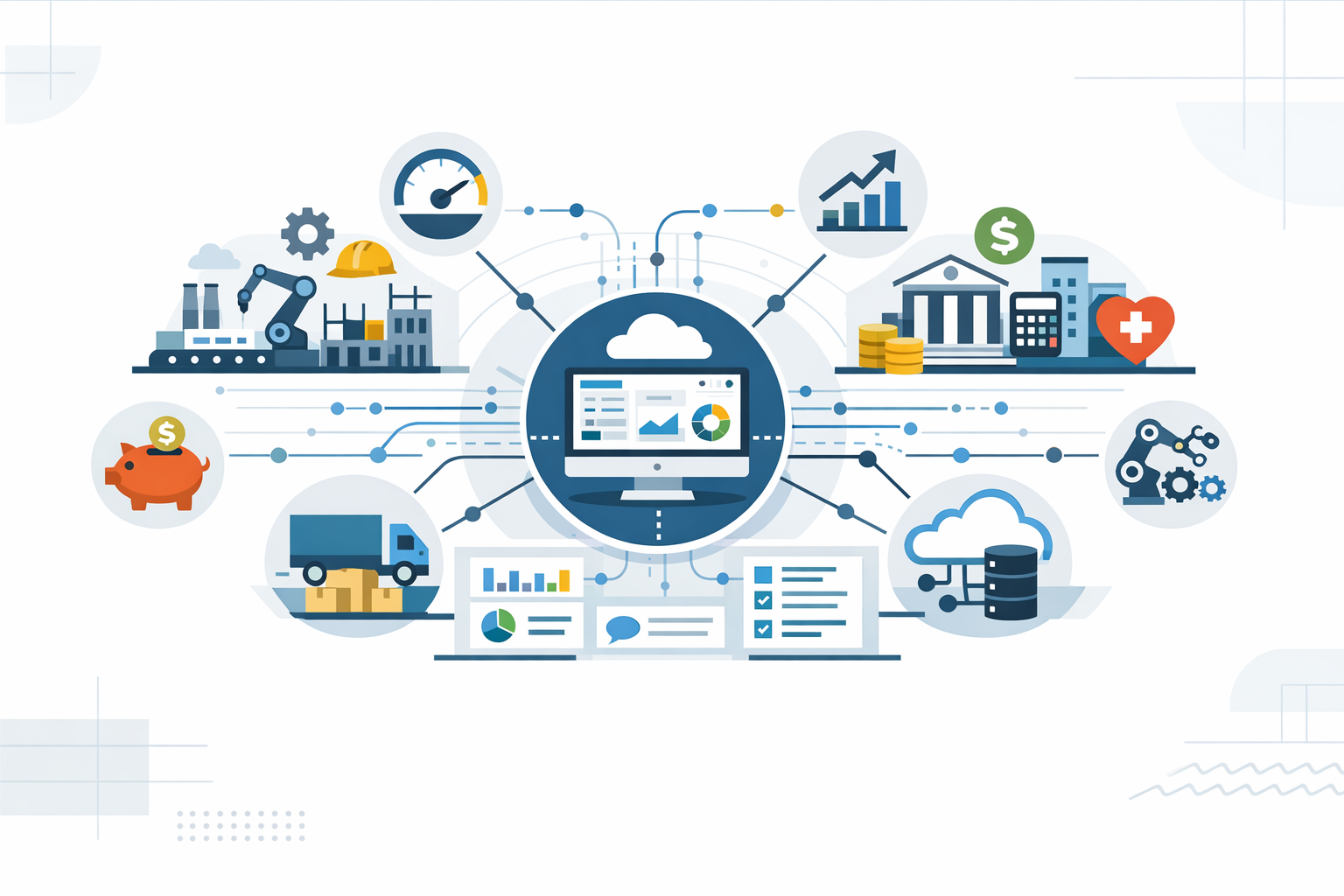
Agentic AI in CRM is delivering transformative results across diverse sectors. While the core technology remains consistent, the applications vary significantly based on industry-specific needs, regulatory environments, and customer expectations.
Retail and E-Commerce
Retailers are deploying AI agents to manage the complete customer journey, from personalized product recommendations to automated inventory management. The sophistication of these implementations is reshaping how consumers shop and how retailers operate.
Recommendation Agents: Analyze purchase history, browsing behavior, demographic data, and even real-time factors like weather or local events to suggest products with uncanny accuracy. Unlike simple "customers who bought this also bought that" algorithms, modern agents understand context—recommending winter coats when temperature drops, suggesting complementary items based on upcoming occasions in customer calendars, or identifying gift opportunities based on social relationships.
Engagement Agents: Handle customer queries across chat, email, in-store kiosks, and mobile apps with consistent, personalized responses. These agents remember previous conversations, understand purchase history, and can help with everything from size recommendations to order tracking to returns processing.
Fulfillment Agents: Track inventory in real-time across warehouses, stores, and distribution centers. When a customer places an order, these agents automatically select the optimal fulfillment location based on proximity, inventory levels, and shipping costs. They predict stockouts before they occur, automatically triggering restocking orders and even adjusting marketing campaigns to shift demand toward available products.
Dynamic Pricing Agents: Continuously analyze competitor pricing, demand signals, inventory levels, and margin targets to optimize pricing in real-time. A customer viewing a product might receive a personalized discount if the agent determines they're price-sensitive and unlikely to convert at full price.
Customer Retention Agents: Monitor purchasing patterns to identify customers at risk of churning. If a previously active customer hasn't made a purchase in an unusual timeframe, the agent might trigger a personalized re-engagement campaign, offer a timely discount, or alert a customer service representative to reach out personally.
Results include 20% to 50% faster inventory turnover, 15% to 30% higher customer engagement rates, and 10-25% improvements in conversion rates. A major fashion retailer reported reducing excess inventory by 35% while simultaneously decreasing stockouts by 40%, directly attributable to AI-driven demand forecasting and inventory management.
Distribution and Wholesale
Distribution companies require CRM systems that connect inventory, sales, and customer service seamlessly—often across complex networks of manufacturers, distributors, and end customers. Agentic AI provides capabilities that were previously possible only for the largest enterprises with custom-built systems.
Order Management Agents: Process orders from multiple channels (phone, email, EDI, web portals), automatically validate inventory availability, confirm pricing based on customer-specific contracts, calculate shipping costs, and generate confirmation documentation—all without human intervention for routine orders.
Sales Representatives Support: Provide real-time inventory visibility, pricing information, and customer insights to field sales teams. When a representative is meeting with a customer, the agent can instantly check product availability across all warehouses, apply appropriate volume discounts, and even suggest complementary products based on the customer's industry and past purchases.
Logistics Coordination: Optimize shipping routes, consolidate orders to minimize costs, and proactively communicate delivery status to customers. If a shipment is delayed, the agent automatically notifies affected customers, updates expected delivery dates, and can offer alternatives if time-sensitivity is high.
Credit and Collections: Monitor customer payment patterns, flag accounts approaching credit limits, and automate collection workflows for overdue invoices while maintaining sensitivity to customer relationships. High-value customers might receive personal outreach, while smaller accounts get automated reminders.
Inventory Allocation: When products are in short supply, AI agents allocate inventory based on customer priority, historical ordering patterns, and strategic relationships rather than simple first-come-first-served, maximizing revenue and maintaining key relationships.
A wholesale distributor implemented agentic AI and reported 23% reduction in order processing costs, 18% improvement in on-time deliveries, and 40% reduction in inventory carrying costs within the first year.
Healthcare
AI agents in healthcare CRM systems manage patient communications, appointment scheduling, billing inquiries, and care coordination—all while maintaining strict compliance with privacy regulations like HIPAA.
Patient Engagement Agents: Send appointment reminders, pre-visit instructions, and post-visit follow-ups automatically. These agents can answer common questions about office hours, insurance acceptance, and required documentation without requiring staff intervention.
Scheduling and Coordination: Manage complex scheduling requirements across multiple providers, specialties, and facilities. When a primary care physician refers a patient to a specialist, the agent can automatically check availability, schedule appointments, transfer medical records, and ensure the patient understands next steps.
Prescription and Refill Management: Process refill requests, coordinate with pharmacies, and alert patients when prescriptions are due for renewal. Agents can identify potential adherence issues—such as patients not refilling medications on time—and trigger outreach from care coordinators.
Billing and Insurance: Answer billing questions, verify insurance coverage, process payment plans, and help patients understand their financial obligations. By handling routine inquiries automatically, staff can focus on complex cases requiring human judgment.
Population Health Management: Monitor patient populations for preventive care opportunities, chronic disease management gaps, and wellness program eligibility. An agent might identify diabetic patients who haven't had recent eye exams and automatically schedule outreach campaigns.
Clinical Trial Recruitment: Identify patients who might be eligible for clinical trials based on diagnosis codes, demographics, and medical history, then coordinate outreach and enrollment processes.
This reduces administrative burden on clinical staff by an estimated 30-40%, improves patient satisfaction through better communication and convenience, and enhances care quality by ensuring patients receive timely preventive services and follow-up care.
Financial Services
In banking and insurance, agentic AI autonomously detects anomalies, forecasts cash needs, and recommends portfolio reallocations. Risk events have been reduced by up to 60% in pilot environments, while customer service quality improves through faster, more accurate responses to inquiries.
Fraud Detection and Prevention: Monitor transactions in real-time, identifying suspicious patterns and taking immediate protective action while minimizing false positives that frustrate customers. The agent might temporarily freeze a card that shows unusual spending patterns while simultaneously notifying the customer to verify transactions.
Relationship Management: Track customer life events, investment performance, and service interactions to identify opportunities for deeper engagement. When a customer experiences a major life change—marriage, new home purchase, inheritance—the agent can alert relationship managers to schedule appropriate conversations.
Loan Processing: Automate initial underwriting processes, gathering required documentation, verifying information, and making preliminary approval decisions for straightforward applications. Complex cases are immediately routed to human underwriters with comprehensive documentation packages already prepared.
Regulatory Compliance: Monitor communications and transactions for potential compliance issues, automatically documenting decisions, and ensuring all required disclosures are provided. When regulatory requirements change, the agent incorporates new rules across all customer interactions immediately.
Market Intelligence: Aggregate data across customer portfolios to identify trends, risks, and opportunities. The agent might notice increasing customer interest in sustainable investing and recommend developing new product offerings.
Financial institutions implementing agentic AI report 25-35% reduction in operational costs for routine transactions while improving customer satisfaction scores and reducing compliance incidents.
Professional Services
For independent sales representatives, consultants, and small service businesses, agentic AI acts as a digital assistant that manages lead tracking, automates follow-ups, updates CRM records, and ensures no opportunity falls through the cracks—providing enterprise-level capabilities at a fraction of traditional costs.
Lead Management for Independent Representatives: Capture leads from multiple sources (referrals, networking events, website inquiries, social media), automatically qualify them based on defined criteria, and ensure timely follow-up. The agent might send personalized emails, schedule calls, and remind the representative of upcoming commitments.
Project Coordination: Track project milestones, client communications, deliverables, and invoicing. When a project phase completes, the agent can automatically generate invoices, send them to clients, track payment status, and follow up on overdue amounts.
Proposal Automation: Generate customized proposals by pulling relevant case studies, pricing information, and service descriptions based on client needs and industry. The agent can track proposal status, send follow-up reminders, and alert the representative when prospects view or engage with the document.
Client Relationship Maintenance: Ensure regular touchpoints with existing clients through automated check-ins, birthday greetings, and value-added content sharing. The agent identifies clients who haven't been contacted recently and suggests appropriate outreach.
Time and Billing: Track billable hours, expenses, and project budgets automatically. The agent can alert when projects approach budget limits, suggest adjustments, and generate detailed invoices with all relevant time entries and expenses included.
A consulting firm with 12 independent contractors implemented agentic AI and reported that consultants saved an average of 8 hours per week on administrative tasks, allowing them to take on 20% more billable work without increasing working hours.
Manufacturing
Manufacturers use agentic AI to connect sales, production planning, and supply chain management, creating responsive systems that adapt to changing demand and resource constraints.
Demand Forecasting: Analyze historical sales data, current pipeline, market trends, and external factors (seasonality, economic indicators, competitor actions) to predict future demand with high accuracy. These forecasts automatically drive production planning and raw material procurement.
Configure-Price-Quote (CPQ) Automation: Handle complex product configurations, ensuring technical feasibility while optimizing pricing based on costs, margin targets, and competitive positioning. Sales teams can generate accurate quotes in minutes rather than days.
Production Scheduling: Coordinate between sales commitments and manufacturing capacity, automatically adjusting production schedules when new orders arrive or delays occur. The agent communicates expected delivery dates to customers and alerts them proactively if timelines change.
Customer-Specific Inventory: Manage consignment inventory, vendor-managed inventory, and customer-specific stock levels, automatically triggering replenishment when thresholds are reached.
Quality and Returns Management: Track quality issues, warranty claims, and return patterns to identify product defects or customer training needs. The agent can automatically process routine returns while flagging unusual patterns for investigation.
Manufacturers report 15-30% improvement in forecast accuracy, 20-40% reduction in quote generation time, and 10-25% better on-time delivery performance after implementing agentic AI systems.
Leading CRM Platforms Embracing Agentic AI
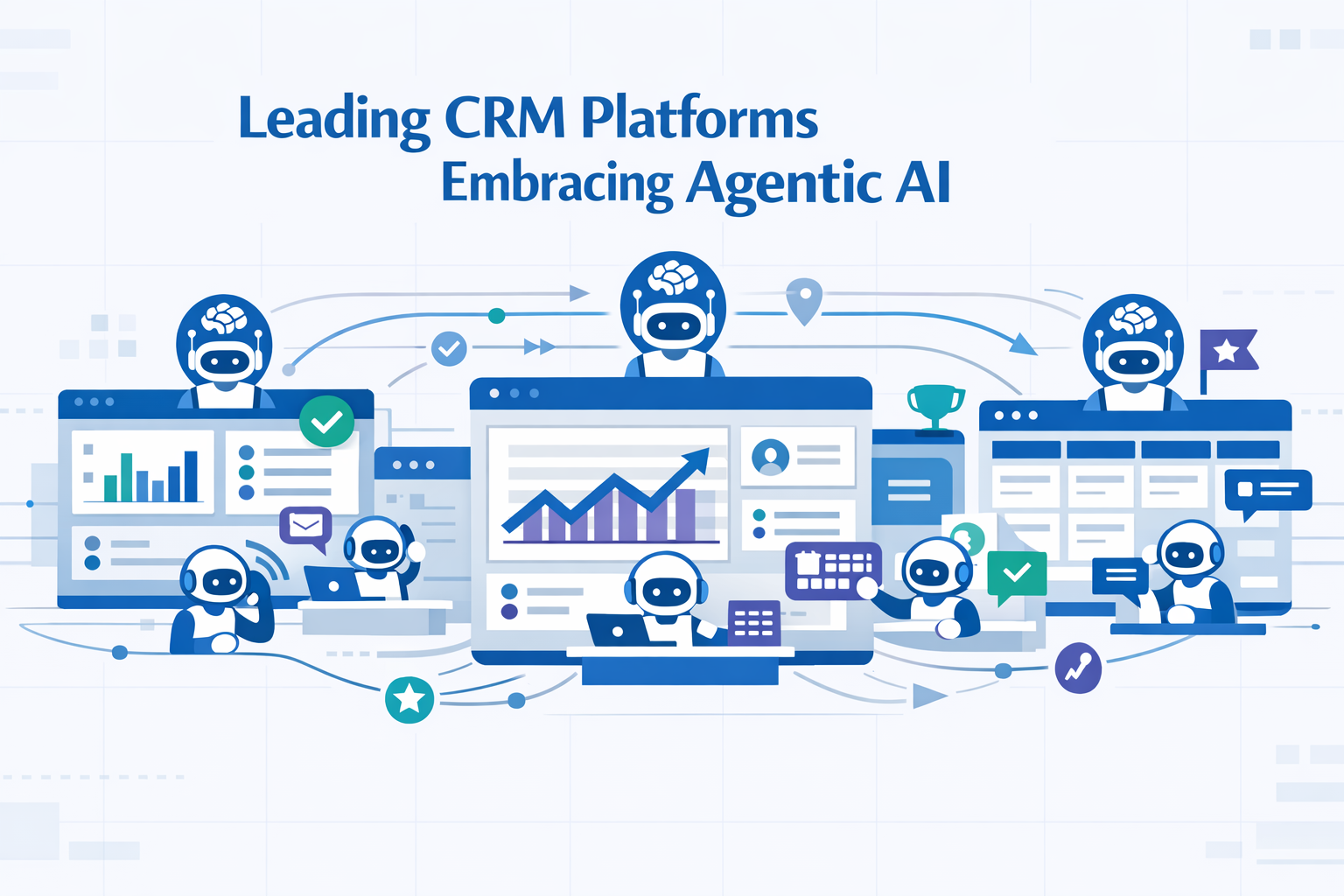
Major CRM vendors are rapidly integrating agentic AI capabilities into their platforms:
Salesforce with Agentforce
Salesforce has built Agentforce on top of Einstein AI, creating a platform where agents don't just suggest actions—they execute them. Data Cloud pulls information from across systems to provide comprehensive customer context. Lead scoring, marketing campaign optimization, and service issue resolution happen automatically, with agents accessing unified customer profiles to understand purchase history, support interactions, and marketing engagement simultaneously.
Salesforce is investing heavily in agentic AI infrastructure, with recent commitments of $500 million over five years to expand capabilities globally.
Microsoft Dynamics 365
Microsoft's agentic CRM and ERP platforms leverage Copilot technology throughout Dynamics 365, creating workflows that connect seamlessly with Microsoft 365, Azure, and Power Platform. For organizations already using Microsoft tools, this integration means AI agents can access and act on data across the entire technology stack, from email and calendar to financial systems and collaboration tools.
HubSpot with Breeze AI Agents
HubSpot has launched AI Agents and Breeze Copilot together—one runs workflows autonomously while the other assists human users. The platform focuses on maintaining simplicity while adding intelligence, making advanced AI capabilities accessible to small and medium-sized businesses without requiring technical expertise.
monday.com
monday.com stands out for its visual, user-friendly design and exceptional flexibility. Teams can create custom automations, track sales pipeline stages, and adapt workflows to their specific business operations. With quick onboarding and collaborative capabilities, it's an excellent choice for organizations seeking simplicity without sacrificing control. The platform integrates with Shopify, WooCommerce, BigCommerce, and over 200 other applications.
Pipedrive
Pipedrive started as a visual sales pipeline tool and has added AI-powered insights focused specifically on sales team productivity. The platform prioritizes ease of use for sales professionals, offering AI-driven forecasting, lead scoring, and activity recommendations that help teams close deals faster.
Zoho CRM with Zia AI
Zoho delivers agentic capabilities designed specifically for small and mid-sized businesses. Zia AI provides automation without enterprise complexity or cost. The platform includes workflow automation, multi-channel communication, analytics, and seamless integration with Zoho Inventory and other Zoho products, creating a comprehensive business management environment at competitive pricing.
The Role of CRM Migration in AI Adoption
Transitioning to an agentic AI-powered CRM often requires migrating data from legacy systems. This process is critical—poor migration can lead to data loss, corruption, and disrupted operations that undermine the benefits of AI adoption.
Why CRM Migration Matters for AI Success
Data Quality: Agentic AI systems require clean, accurate, well-structured data to function effectively. Migration provides an opportunity to audit, clean, and optimize your data before introducing AI capabilities.
System Compatibility: Legacy platforms may lack the infrastructure to support modern AI agents. Migration enables businesses to move to platforms specifically designed for agentic AI workflows.
Unified Data Models: Successful AI implementation depends on unified customer profiles that integrate data from sales, marketing, service, and operations. Migration establishes the data architecture needed for this integration.
Solutions from MigrateMyCRM
MigrateMyCRM (formerly Trujay) specializes in making CRM data migration straightforward and secure, with over 4,270 successful migrations completed. Their platform supports 25+ cloud-based CRM systems plus CSV and Excel files, with an additional 50+ connectors available for custom migrations.
Key Features:
AI-Powered Automapping: Intelligent field mapping automatically matches objects and fields between source and target CRMs, dramatically reducing setup time.
Unlimited Free Sample Migrations: Test migrations with approximately 10% of your records, adjust mappings, and perfect the process before executing the full migration—all without cost.
Custom Field Management: Create new fields in the target CRM directly from the interface, with bulk creation support for handling numerous custom fields efficiently.
Duplicate Prevention: Advanced matching logic identifies potential duplicates based on criteria like company name or domain, ensuring data integrity.
Field Usage Analytics: See which fields contain data and how frequently they're used, enabling informed decisions about what to migrate.
Complete Relationship Preservation: Maintain all associations between records—contacts, companies, attachments, activities—ensuring nothing is lost in transition.
Enterprise-Grade Security: ISO certified and GDPR compliant, trusted by organizations with the strictest security requirements.
The platform offers flexible migration options: self-service for those who want control, guided assistance for complex scenarios, or full-service where migration experts handle the entire process.
The Migration Process
A successful CRM migration follows these key steps:
- Assessment and Planning: Evaluate current data quality, identify critical fields and relationships, and establish clear migration objectives.
- Data Audit and Cleanup: Review data for accuracy, remove duplicates, correct errors, and update outdated information.
- Platform Selection: Choose the CRM platform that best supports your agentic AI requirements and business workflows.
- Mapping and Configuration: Define how data fields, custom objects, and relationships will transfer to the new system.
- Testing and Validation: Run sample migrations, verify data accuracy, test system functionality, and validate integrations.
- Execution and Monitoring: Perform the full migration during low-activity periods, monitor closely for issues, and address problems promptly.
- Post-Migration Optimization: Train teams, refine workflows, and ensure the new system delivers expected benefits.
CRM Integration: The Foundation for Agentic Success
While migration moves you to the right platform, integration ensures your agentic AI system can access and act on data across your entire business ecosystem.
Why Integration Is Critical
Agentic AI agents need comprehensive context to make intelligent decisions. This requires connecting your CRM with ERP systems, marketing platforms, customer service tools, inventory management, accounting software, and more. Without integration, agents operate with incomplete information, limiting their effectiveness.
Solutions from SyncMatters
SyncMatters is at the forefront of CRM integration solutions, offering expert guidance and strategic implementation across leading platforms including monday.com, HubSpot, and Salesforce. As a certified Elite HubSpot partner, they bring exceptional expertise in integration, onboarding, and data management.
Core Integration Capabilities:
Custom CRM and ERP Integrations: Personalized connections between your CRM or ERP and any sales, marketing, or finance tool. SyncMatters creates tailored integrations that ensure seamless data flow, optimized performance, and systems that truly work for your specific needs.
45+ Pre-Built Connectors: Extensive library of ready-to-use integrations covering major business platforms.
Bidirectional Data Sync: Real-time synchronization ensures all systems maintain current, accurate information.
Automated Workflow Creation: Connect processes across departments—when a sales opportunity progresses, automatically update inventory forecasts, trigger marketing campaigns, and prepare customer success teams.
Error Resolution and Monitoring: Continuous monitoring with automated error detection and resolution ensures integrations run smoothly.
Scalable Architecture: Integration platforms that grow with your business, handling increasing data volumes and complexity without performance degradation.
Breaking Down Data Silos
SyncMatters specializes in eliminating the data silos that plague many organizations. When CRM systems operate in isolation from ERP, finance, and operational systems, teams make decisions with incomplete information. Integration creates a unified view where sales teams can see inventory levels and production schedules, operations can access customer commitments, and finance has real-time visibility into the entire order-to-cash cycle.
This unified approach is essential for agentic AI success—agents can only be as intelligent as the data they can access.
Common Integration Scenarios:
- CRM-ERP Integration: Synchronize customer data, orders, inventory, and financials for complete visibility across sales and operations.
- Marketing Platform Integration: Connect email marketing, advertising platforms, and analytics tools to create cohesive, data-driven campaigns.
- Customer Service Integration: Unify support ticketing, knowledge bases, and communication channels with customer records.
- E-Commerce Integration: Sync online store data, including purchases, browsing behavior, and cart abandonment, directly into CRM for personalized follow-up.
Challenges and Considerations
While agentic AI offers tremendous benefits, successful implementation requires addressing several key challenges:
Data Quality and Governance
AI agents are only as effective as the data they work with. Organizations must establish robust data governance practices, including regular auditing, cleaning, and validation processes. Poor data quality leads to flawed decisions, reduced customer satisfaction, and wasted resources.
Balancing Autonomy and Oversight
Finding the right level of autonomy for AI agents is critical. Too much autonomy without proper guardrails can lead to errors or decisions that don't align with business values. Too much oversight negates efficiency benefits. Implement human-in-the-loop governance for high-stakes decisions, with clear approval workflows and explainability dashboards that show why agents made specific recommendations.
Integration Complexity
Connecting agentic AI systems with legacy platforms, disparate data sources, and existing workflows can be technically challenging and time-consuming. Partner with integration experts who understand both the technical requirements and the business processes you're trying to optimize.
Security and Privacy
AI agents that access and act on customer data must comply with privacy regulations like GDPR and maintain enterprise-grade security. Ensure your CRM platform and integration partners offer encrypted data transmission, strict access controls, and comprehensive audit trails.
Change Management
Introducing agentic AI represents a significant shift in how teams work. Success requires effective change management: clearly communicate benefits, provide comprehensive training, address concerns, and give teams time to adapt to new workflows.
Cost Considerations
While agentic AI delivers ROI through efficiency gains and revenue growth, initial implementation involves costs for platform licenses, migration services, integration development, and training. Develop realistic budgets and timelines, understanding that benefits typically materialize over months, not days.
Getting Started with Agentic AI
Ready to transform your CRM with agentic AI? Follow this practical roadmap:
1. Assess Your Current State
Evaluate your existing CRM system, data quality, and business processes. Identify pain points where agentic AI could deliver the most value—whether that's lead qualification, customer service, sales forecasting, or workflow automation.
2. Define Clear Objectives
Establish specific, measurable goals for your agentic AI implementation. Examples might include reducing lead response time by 50%, increasing conversion rates by 25%, or automating 60% of routine customer service inquiries.
3. Choose the Right Platform
Select a CRM platform that offers robust agentic AI capabilities and aligns with your business needs. Consider factors like:
- AI features and maturity
- Integration capabilities
- Scalability
- Industry-specific functionality
- Vendor support and ecosystem
- Total cost of ownership
4. Plan Your Migration
If moving from a legacy system, develop a comprehensive migration strategy. Partner with experts like MigrateMyCRM to ensure data quality, prevent losses, and minimize business disruption. Use sample migrations to validate your approach before committing to full execution.
5. Build Integration Architecture
Work with integration specialists like SyncMatters to connect your new CRM with existing systems. Prioritize integrations that provide AI agents with the contextual data they need to make intelligent decisions.
6. Start with Pilot Use Cases
Begin with one or two high-value, relatively straightforward use cases. This allows you to demonstrate results, refine your approach, and build organizational confidence before expanding to more complex scenarios.
7. Implement Governance Frameworks
Establish clear policies for AI agent behavior, including decision-making authority, escalation protocols, data access controls, and audit requirements. Build monitoring dashboards that provide visibility into agent activities and outcomes.
8. Train Your Teams
Provide comprehensive training on both the technical aspects of the new system and the strategic implications of working alongside AI agents. Help teams understand how their roles evolve and how they can maximize value from AI assistance.
9. Monitor, Measure, and Optimize
Continuously track performance against your defined objectives. Use analytics to identify opportunities for optimization, refine agent behaviors, and expand successful patterns to additional use cases.
10. Scale Strategically
As you demonstrate success with initial implementations, systematically expand agentic AI capabilities across additional departments, workflows, and customer touchpoints. Build on lessons learned and maintain focus on delivering measurable business value.
The Future of Agentic AI in CRM
The current state of agentic AI in CRM is impressive, but we're still in the early stages of this transformation. Looking ahead, several trends will shape how these systems evolve and the value they deliver to businesses.
Multi-Modal AI Agents
Current AI agents primarily work with text data—emails, chat messages, form entries, and database fields. The next generation will seamlessly process multiple modalities: voice conversations, images, videos, and sensor data. A customer service agent might analyze a photo of a damaged product, understand a voice complaint, review the customer's account history, and generate a resolution—all in a single, fluid interaction.
In sales contexts, agents will analyze video calls to detect buying signals, assess presentation effectiveness, and provide real-time coaching to representatives. Marketing agents will create and optimize visual content, not just text, testing different images, videos, and designs to maximize engagement.
Hyper-Personalization Through Micro-Segmentation
While current systems can personalize based on broad customer segments and historical behavior, future agents will treat each customer as a segment of one. Machine learning models will understand individual preferences, communication styles, decision-making patterns, and life circumstances with such precision that every interaction feels uniquely crafted.
This goes beyond "Hi [FirstName]" personalization to understand that Customer A prefers technical specifications and responds well to data-driven arguments, while Customer B values relationship-building and responds to narrative case studies. The same product might be positioned completely differently to different prospects based on their individual psychographic profiles.
Emotional Intelligence and Sentiment Analysis
Future agentic systems will not just understand what customers say, but how they feel. Advanced sentiment analysis will detect frustration, excitement, confusion, or satisfaction in customer communications, allowing agents to adapt their approach dynamically.
A customer service agent might detect rising frustration in a chat conversation and automatically escalate to a human representative before the customer explicitly requests it. A sales agent might notice declining engagement in email responses and shift strategy, perhaps suggesting a phone call or offering different content.
Predictive Customer Journey Orchestration
Rather than reacting to customer actions, future systems will predict the optimal journey for each customer and orchestrate experiences to guide them along that path. The agent might determine that a particular prospect needs three educational touchpoints before a sales conversation, delivered over two weeks via email and webinar, followed by a personalized demo and a 48-hour decision window with a limited-time offer.
These predictions will be based not just on historical data but on real-time signals, continuously adapting as customer behavior evolves. If a prospect suddenly accelerates their research, the agent recognizes this shift and adjusts the journey accordingly.
Autonomous Strategic Decision-Making
Today's agents primarily handle tactical and operational decisions—which lead to contact, what message to send, when to schedule a follow-up. Future systems will increasingly make strategic decisions: which markets to enter, what products to develop, how to position against competitors, and where to allocate marketing budget.
These strategic agents will synthesize vast amounts of internal and external data—customer feedback, competitive intelligence, market trends, economic indicators, regulatory changes—to recommend strategic initiatives with supporting rationale. While humans will retain ultimate decision authority, AI agents will surface insights and opportunities that might otherwise remain hidden.
Collaborative Human-AI Workflows
The future isn't about AI replacing humans, but about creating collaborative workflows where each contributes what they do best. AI agents excel at processing vast amounts of data, maintaining consistency, working 24/7, and executing defined processes. Humans excel at creative problem-solving, building deep relationships, exercising judgment in novel situations, and making ethical decisions in ambiguous contexts.
Future CRM systems will seamlessly blend these capabilities. An agent might handle 95% of a customer conversation, then recognize a moment where human empathy or creative problem-solving is needed and instantly bring in the appropriate person with full context. The human resolves the complex element, and the agent takes back over for follow-up and execution.
Ethical AI and Transparency
As AI agents make more consequential decisions, transparency and ethical considerations become increasingly important. Future systems will include explainability features that allow users to understand why an agent made a particular decision or recommendation.
Organizations will develop AI governance frameworks defining acceptable agent behavior, ethical boundaries, and audit requirements. Agents will be designed with built-in fairness checks, preventing discriminatory outcomes and ensuring compliance with evolving regulations around AI use.
Industry-Specific AI Agents
While current agentic AI systems are largely generalized, future development will include deep specialization for specific industries and use cases. A healthcare AI agent will understand clinical workflows, medical terminology, insurance regulations, and care coordination requirements in ways that a retail agent wouldn't need.
These specialized agents will be pre-trained on industry-specific data, incorporate domain expertise, and come configured with relevant workflows and compliance requirements, reducing implementation time and improving effectiveness.
Continuous Learning and Improvement
Future AI agents will learn not just from their own experiences but from the collective experiences of all agents across an organization or even across an entire platform. When one agent discovers an effective strategy for re-engaging dormant customers, that learning propagates to other agents, creating continuously improving systems that get smarter over time.
This collective intelligence means that businesses deploying agentic AI don't just get a static tool—they get a system that becomes increasingly effective with use, compounding value over time.
Integration with Emerging Technologies
Agentic AI will increasingly integrate with other emerging technologies:
- Blockchain: For transparent, immutable audit trails and smart contract execution
- IoT: Processing sensor data from connected products to predict service needs and trigger proactive support
- AR/VR: Creating immersive customer experiences guided by AI agents
- Quantum Computing: Solving optimization problems that are intractable with classical computing
The Path Forward
The trajectory is clear: agentic AI will become increasingly sophisticated, autonomous, and valuable. Businesses that embrace these technologies early, learn how to deploy them effectively, and build organizational capabilities around human-AI collaboration will develop sustainable competitive advantages.
The question for business leaders isn't whether to adopt agentic AI in their CRM systems, but how quickly they can do so and how effectively they can integrate these capabilities into their operations and culture.
Frequently Asked Questions
What's the difference between agentic AI and traditional CRM automation?
Traditional CRM automation follows rigid, pre-programmed rules. If Condition A occurs, then execute Action B. These systems require manual configuration for every scenario and can't handle exceptions or adapt to changing conditions.
Agentic AI, by contrast, understands goals and works autonomously to achieve them. Rather than following a strict script, agents analyze situations, consider multiple options, and make contextual decisions. They learn from outcomes and continuously improve their performance. While traditional automation might send an email when a lead fills out a form, an agentic system evaluates the lead's quality, determines the optimal outreach strategy, personalizes messaging based on the prospect's behavior and preferences, times the communication for maximum impact, and adjusts its approach based on responses.
How long does it take to implement agentic AI in a CRM system?
Implementation timelines vary significantly based on several factors:
Quick Start (2-4 weeks): Organizations with clean data, modern CRM platforms, and straightforward processes can begin seeing value from basic agentic AI capabilities within a few weeks. This might include automated lead scoring, simple chatbots, or automated email campaigns.
Moderate Implementation (2-4 months): Most organizations fall into this category, requiring data migration or cleanup, integration with multiple systems, and configuration of more sophisticated workflows. This timeline includes planning, testing, and initial deployment of core capabilities.
Complex Enterprise Deployment (6-12 months): Large organizations with legacy systems, complex business processes, strict compliance requirements, or extensive integration needs might require longer implementations. This often involves phased rollouts, starting with specific departments or use cases before expanding organization-wide.
The key is to think of agentic AI implementation as a journey rather than a destination. Most successful organizations start with high-value use cases, demonstrate results, learn from experience, and progressively expand capabilities over time.
Do I need to replace my current CRM to use agentic AI?
Not necessarily, though it depends on your current platform. Many modern CRM systems—including Salesforce, HubSpot, Microsoft Dynamics 365, Zoho, and others—are adding native agentic AI capabilities that work within the existing platform.
However, some older or more limited CRM systems may lack the technical infrastructure to support advanced AI agents. In these cases, you might:
- Upgrade to a newer version of your current platform that includes AI capabilities
- Add AI functionality through integration with third-party AI platforms that connect to your existing CRM
- Migrate to a modern platform with built-in agentic AI features
Working with specialists like MigrateMyCRM can help you evaluate whether migration makes sense for your situation and execute the transition if needed with minimal disruption.
What happens to my data during CRM migration?
Professional CRM migration processes are designed to preserve and protect your data throughout the transition. Here's what typically happens:
Pre-Migration: Your data is audited, cleaned, and mapped to the new system's structure. This includes identifying duplicates, correcting errors, and ensuring field compatibility.
Sample Migrations: Most migration tools allow you to test with a subset of data, verifying that everything transfers correctly before committing to the full migration.
Full Migration: Complete data transfer occurs, typically during low-activity periods to minimize business disruption. This includes records, attachments, relationships between objects, historical activities, and custom fields.
Validation: Post-migration verification ensures data accuracy, completeness, and system functionality.
Backup: Your source system remains unchanged during migration, providing a complete backup if any issues occur.
Professional migration services like those offered by MigrateMyCRM include encryption, compliance with data protection regulations, and comprehensive audit trails. Most organizations experience zero data loss when working with experienced migration providers.
How much does agentic AI for CRM cost?
Costs vary widely based on platform choice, implementation complexity, business size, and feature requirements:
Small Business (1-25 users):
- Platform licenses: $500-$3,000/month
- Implementation/setup: $2,000-$15,000 one-time
- Integration services: $1,000-$10,000 one-time
- Total first-year: $10,000-$50,000
Mid-Market (25-200 users):
- Platform licenses: $3,000-$25,000/month
- Implementation/setup: $15,000-$75,000 one-time
- Integration/customization: $10,000-$50,000 one-time
- Total first-year: $60,000-$350,000
Enterprise (200+ users):
- Platform licenses: $25,000-$100,000+/month
- Implementation/setup: $75,000-$500,000+ one-time
- Integration/customization: $50,000-$500,000+ one-time
- Total first-year: $400,000-$2,000,000+
While these numbers might seem substantial, most organizations see positive ROI within 6-18 months through efficiency gains, increased revenue, and reduced operational costs. The key is to start with high-value use cases that quickly demonstrate return on investment.
Will agentic AI replace my sales and customer service teams?
No, agentic AI is designed to augment human teams, not replace them. The goal is to automate routine, repetitive tasks so that your team can focus on high-value activities that require human judgment, creativity, and relationship-building.
What AI handles: Data entry, routine follow-ups, initial lead qualification, common customer service inquiries, meeting scheduling, report generation, and basic data analysis.
What humans handle: Complex negotiations, strategic account planning, creative problem-solving, building deep customer relationships, handling sensitive situations, making ethical decisions, and managing exceptions that fall outside standard patterns.
Organizations implementing agentic AI typically find that job roles evolve rather than disappear. Sales representatives spend more time on consultative selling and less on administrative work. Customer service teams handle complex, interesting problems rather than answering the same basic questions repeatedly. Marketing teams focus on strategy and creativity while AI handles execution and optimization.
The businesses that succeed are those that view agentic AI as a tool to make their teams more effective, not as a replacement for human expertise.
How secure is agentic AI in handling customer data?
Security is a critical consideration, and reputable agentic AI platforms implement multiple layers of protection:
Data Encryption: Information is encrypted both in transit (as it moves between systems) and at rest (when stored in databases).
Access Controls: Role-based permissions ensure that AI agents (and human users) can only access data necessary for their functions.
Audit Trails: Comprehensive logging tracks every data access and action, creating accountability and enabling security reviews.
Compliance Certifications: Leading platforms maintain certifications for standards like SOC 2, ISO 27001, GDPR, HIPAA (for healthcare), and industry-specific regulations.
Data Residency: Enterprise platforms often allow you to specify where data is stored geographically to comply with local regulations.
Anonymization and Privacy: Advanced systems can work with anonymized or synthetic data for testing and development, protecting customer privacy.
When evaluating platforms, verify their security certifications, ask about their incident response procedures, and ensure they align with your organization's security requirements and compliance obligations.
Can agentic AI work with my existing tech stack?
Modern agentic AI platforms are designed to integrate with a wide range of business systems, including:
- ERP Systems: SAP, Oracle, NetSuite, Microsoft Dynamics
- Marketing Platforms: Marketo, Pardot, MailChimp, HubSpot Marketing
- Customer Service Tools: Zendesk, Freshdesk, ServiceNow
- Communication Platforms: Slack, Microsoft Teams, email providers
- E-commerce Platforms: Shopify, WooCommerce, BigCommerce, Magento
- Analytics Tools: Google Analytics, Tableau, Power BI
- Accounting Software: QuickBooks, Xero, Sage
Most platforms offer pre-built connectors for common integrations, while custom integrations can be developed for specialized systems. Integration specialists like SyncMatters can help design and implement the connections needed to create a unified technology ecosystem.
The key is ensuring your agentic AI system can access all the data it needs to make intelligent decisions and take effective actions across your entire customer journey.
How do I measure ROI from agentic AI implementation?
Measuring ROI requires tracking both hard costs and quantifiable benefits:
Costs to Track:
- Platform licensing fees
- Implementation and integration services
- Training and change management
- Ongoing maintenance and support
- Any additional infrastructure or resources
Benefits to Measure:
- Efficiency Gains: Hours saved on manual tasks, reduction in administrative overhead, faster process cycle times
- Revenue Impact: Increased conversion rates, higher average deal sizes, reduced customer churn, expansion of existing accounts
- Cost Reduction: Decreased staffing needs for routine tasks, lower error rates and rework, reduced customer acquisition costs
- Customer Impact: Improved satisfaction scores, faster response times, higher retention rates, increased lifetime value
- Data Quality: More complete records, fewer duplicates, better forecast accuracy
Most organizations establish baseline metrics before implementation, then track improvements over time. Key performance indicators might include:
- Lead-to-opportunity conversion rate
- Average sales cycle length
- Customer acquisition cost
- Customer lifetime value
- Net Promoter Score
- First-contact resolution rate
- Average handle time for support inquiries
- Forecast variance
Successful implementations typically show measurable improvements in multiple metrics within the first 3-6 months, with ROI becoming clearly positive within 6-18 months.
What if my team resists adopting AI agents?
Change resistance is natural and should be anticipated. Successful organizations address this through:
Clear Communication: Explain why the change is happening, how it benefits the organization and individuals, and what the future state will look like. Be honest about job evolution while emphasizing that the goal is augmentation, not replacement.
Early Involvement: Include team members in planning and implementation. People are more likely to support changes they helped design.
Training and Support: Provide comprehensive training, ongoing support, and resources to help people succeed with new tools and processes.
Quick Wins: Start with use cases that clearly reduce frustration and free up time for more valuable work. When people experience benefits firsthand, resistance decreases.
Recognition and Incentives: Celebrate early adopters, share success stories, and potentially align compensation or recognition with effective AI utilization.
Patience and Iteration: Allow time for adjustment, gather feedback, make refinements based on real-world experience, and demonstrate responsiveness to concerns.
Remember that the most effective implementations are those where technology and people work together, each contributing their unique strengths.
How often does agentic AI need to be updated or retrained?
This depends on the type of AI and your business context:
Continuous Learning Agents: Many modern agentic AI systems learn continuously from new data and interactions. These agents don't require explicit retraining—they automatically incorporate new patterns and improve over time.
Periodic Updates: Platform providers regularly release updates that enhance capabilities, add features, and improve performance. These updates are typically managed by the vendor and applied with minimal disruption.
Configuration Adjustments: As your business evolves—new products, changed processes, different market conditions—you'll need to update agent configurations, workflows, and rules. This is typically handled through the platform's management interface without deep technical expertise.
Major Retraining: If your business undergoes fundamental transformation (new market segment, significant product pivots, major process redesign), you might need more substantial reconfiguration or retraining of agents. This is relatively rare and typically coincides with broader organizational changes.
The key advantage of modern agentic systems is that they're designed to adapt without constant manual intervention, reducing the ongoing maintenance burden compared to traditional automation.
Can I start small and scale up, or do I need a complete implementation?
Starting small is not only possible—it's the recommended approach for most organizations. Successful agentic AI adoption typically follows this pattern:
Phase 1 - Pilot (1-3 months): Select one or two high-value, relatively straightforward use cases. Perhaps automated lead scoring and basic email nurture campaigns. Demonstrate value, learn what works, and build organizational confidence.
Phase 2 - Expand (3-6 months): Based on pilot results, expand to additional use cases or departments. Maybe add automated customer service for common inquiries or sales opportunity management.
Phase 3 - Integrate (6-12 months): Connect agents across departments, creating coordinated workflows that span the entire customer lifecycle. Sales, marketing, and service agents begin working together seamlessly.
Phase 4 - Optimize (12+ months): Refine agent behaviors based on accumulated data, add more sophisticated capabilities, and extend into strategic decision support.
This phased approach allows you to:
- Demonstrate ROI before making major investments
- Learn from experience and avoid costly mistakes
- Build organizational capabilities progressively
- Maintain business continuity during the transition
- Adjust strategy based on real-world results
You don't need to boil the ocean on day one. Start where you'll see the fastest value, prove the concept, and expand from there.
Conclusion
Agentic AI represents a fundamental transformation in customer relationship management—shifting CRM from a passive data repository to an active business engine that drives customer engagement, optimizes operations, and accelerates growth. This isn't incremental improvement; it's a paradigm shift that changes how businesses operate and compete.
The Imperative for Action
The benefits are clear and well-documented: improved efficiency with 25% to 60% reductions in manual workloads, enhanced customer experiences through 24/7 personalized support, accelerated sales cycles with conversion rate increases of 25% or more, and the ability to scale operations without proportional cost increases. Organizations implementing agentic AI are seeing measurable improvements across virtually every customer-facing metric.
But beyond the specific benefits, there's a more fundamental reality: customer expectations are being set by the best experience they've had anywhere, not just in your industry. When customers experience instant, personalized, seamless service from one company, they expect it from all companies. Businesses that continue operating with manual, reactive CRM processes will increasingly find themselves at a competitive disadvantage—not just against direct competitors, but against the rising bar of customer expectations across all industries.
The Path to Success
Success with agentic AI requires more than just adopting new technology. It demands:
High-Quality Data: Which often necessitates expert migration services from providers like MigrateMyCRM. Clean, accurate, well-structured data is the foundation that everything else builds upon. You cannot achieve intelligent automation without intelligent data.
Comprehensive Integration: Connecting CRM with all the systems that provide critical business context—expertise that specialists like SyncMatters deliver. Agentic AI is only as smart as the data it can access, and that data typically lives across multiple systems that must work together seamlessly.
Thoughtful Implementation: That balances AI autonomy with human oversight, maintains security and privacy, and manages organizational change effectively. Technology is the easy part; the hard part is changing how people work and ensuring they embrace rather than resist the transformation.
Continuous Improvement: Treating agentic AI as a journey rather than a destination, with ongoing optimization, learning, and expansion of capabilities based on real-world results.
Strategic Vision: Understanding that agentic AI isn't just about making existing processes more efficient—it's about enabling entirely new ways of engaging customers, operating businesses, and creating value.
Making the Decision
If you're reading this and wondering whether agentic AI is right for your organization, consider these questions:
- Are your teams spending significant time on manual data entry and administrative tasks?
- Do you struggle to respond quickly to customer inquiries or leads?
- Is personalizing customer interactions at scale challenging with your current systems?
- Are you missing opportunities because leads fall through the cracks?
- Do your sales, marketing, and service teams operate in silos with inconsistent customer data?
- Are you looking to scale your business without proportionally increasing headcount?
- Do your competitors seem to be moving faster and serving customers more effectively?
If you answered yes to several of these questions, agentic AI deserves serious consideration. The organizations thriving in 2025 and beyond will be those that embrace agentic AI not as a futuristic experiment, but as a practical tool for delivering exceptional customer experiences while operating more efficiently than ever before.
The Window of Opportunity
There's currently a window of opportunity for early adopters. While 41% of organizations are investing in AI agents, the majority are still in pilot phases or limited deployments. Businesses that move decisively now can establish competitive advantages—in customer experience, operational efficiency, and market intelligence—before agentic AI becomes table stakes.
Within the next 2-3 years, agentic AI will likely be standard across most CRM platforms, much like mobile access and cloud deployment are today. The question isn't whether your organization will eventually use these capabilities, but whether you'll be an early adopter capturing first-mover advantages or a late adopter playing catch-up to competitors who moved sooner.
Taking the First Step
The journey to agentic AI doesn't require a massive transformation on day one. Start with:
- Assess your current state: Understand your data quality, existing systems, and biggest pain points
- Define clear objectives: Identify specific, measurable goals that agentic AI can help you achieve
- Select a pilot use case: Choose one high-value application where you can demonstrate results quickly
- Partner with experts: Work with platform providers, migration specialists like MigrateMyCRM, and integration experts like SyncMatters who can accelerate your success
- Measure and learn: Track results, gather feedback, refine your approach, and build organizational capability
- Scale strategically: Expand proven successes to additional use cases, departments, and customer touchpoints
The future of customer relationship management is here. It's intelligent, autonomous, personalized, and transformative. It works while you sleep, learns from every interaction, and continuously improves its performance. It enables small teams to compete with large enterprises and allows growing businesses to scale without hitting operational ceilings.
The question is no longer whether to adopt agentic AI in your CRM, but how quickly you can do so while your competitors are making the same realization. The organizations that act now—thoughtfully, strategically, and with the right partners—will be the ones defining the competitive landscape of tomorrow.
Your customers are ready for this level of service. Your team is ready for this level of support. The technology is ready for deployment. The only question remaining is: are you ready to take the first step?
About the Solutions Referenced
SyncMatters is a leading provider of CRM integration and migration solutions, partnering with industry leaders including monday.com, HubSpot, and Salesforce. As a certified Elite HubSpot partner, SyncMatters specializes in strategic implementation, custom integrations, and data migration services that enable businesses to maximize their CRM investments. Their expertise spans custom CRM and ERP integrations, automated workflow creation, and comprehensive data synchronization across business systems. Learn more at syncmatters.com.
MigrateMyCRM (formerly Trujay) is a trusted CRM data migration platform with over 4,270 successful migrations completed. Supporting 25+ CRM systems and offering AI-powered automapping, unlimited free sample migrations, and enterprise-grade security, MigrateMyCRM makes transitioning to modern CRM platforms straightforward and secure. Their platform includes features like custom field management, duplicate prevention, field usage analytics, complete relationship preservation, and flexible migration options from self-service to full-service implementations. ISO certified and GDPR compliant, they're trusted by organizations with the strictest security requirements. Learn more at migratemycrm.com.

.png)