.png?width=160&height=46&name=FMC%20logo%20(6).png "FMC logo")


Is your CRM keeping up with the pace of change in 2026?
Customer relationship management technology is evolving faster than ever before. What started as a simple tool for storing contacts has become the operational backbone of modern businesses—powering sales, marketing, service, and analytics simultaneously. In 2026, CRM platforms are no longer passive databases waiting for input. They're becoming intelligent, autonomous systems that predict, automate, and act on behalf of your teams.
In this article, we break down the most significant emerging trends shaping CRM technology in 2026—and examine how four industry leaders—HubSpot, Salesforce, Zoho, and Pipedrive—are each responding to these shifts.
The State of CRM in 2026
Before exploring individual trends, let's set the stage with a clear picture of where CRM technology stands today.
Key Market Statistics
| Metric | Value |
|---|---|
| Global CRM market size (2026) | ~$98.84 billion |
| Projected market size (2030) | $100+ billion |
| Enterprise apps with AI agents by end of 2026 | ~40% (Gartner) |
| IT leaders planning to deploy autonomous agents within 2 years | 93% (Salesforce report) |
| Companies already using generative AI in CRM strategies | 68% (Gartner) |
| Sales professionals using AI tools | 80% |
| Businesses using cloud-based CRM | 87% |
| Users accessing CRM from multiple devices | 81% |
The Fundamental Shift
CRM platforms evolved from systems of record into systems of action in 2025. In 2026, that transformation accelerates further—CRM is no longer just where you store customer data. It's where intelligent decisions get made and executed automatically.
The era of selecting a CRM based purely on feature lists is over. In 2026, the deciding factors are intelligence, connectivity, governance, and measurable business outcomes.
Trend 1: The Rise of Agentic AI
Perhaps the single most transformative trend defining CRM in 2026 is the emergence of agentic AI—autonomous AI systems capable of not just recommending actions but executing them independently within defined guardrails.
What Is Agentic AI?
Traditional AI in CRM helped users make better decisions. Agentic AI makes decisions and acts on them—qualifying leads, scheduling follow-ups, triggering workflows, updating records, and even handling customer interactions without manual input.
How Agentic AI Works in CRM
| Function | Traditional AI | Agentic AI |
|---|---|---|
| Lead qualification | Scores leads; human decides | Scores, qualifies, and routes automatically |
| Follow-up | Suggests next steps | Sends follow-up emails autonomously |
| Deal management | Flags stalled deals | Initiates outreach to unstall deals |
| Customer service | Suggests knowledge articles | Resolves Tier-1 and Tier-2 tickets end-to-end |
| Data enrichment | Suggests missing fields | Automatically enriches records in real-time |
| Reporting | Generates reports on request | Proactively surfaces insights to decision-makers |
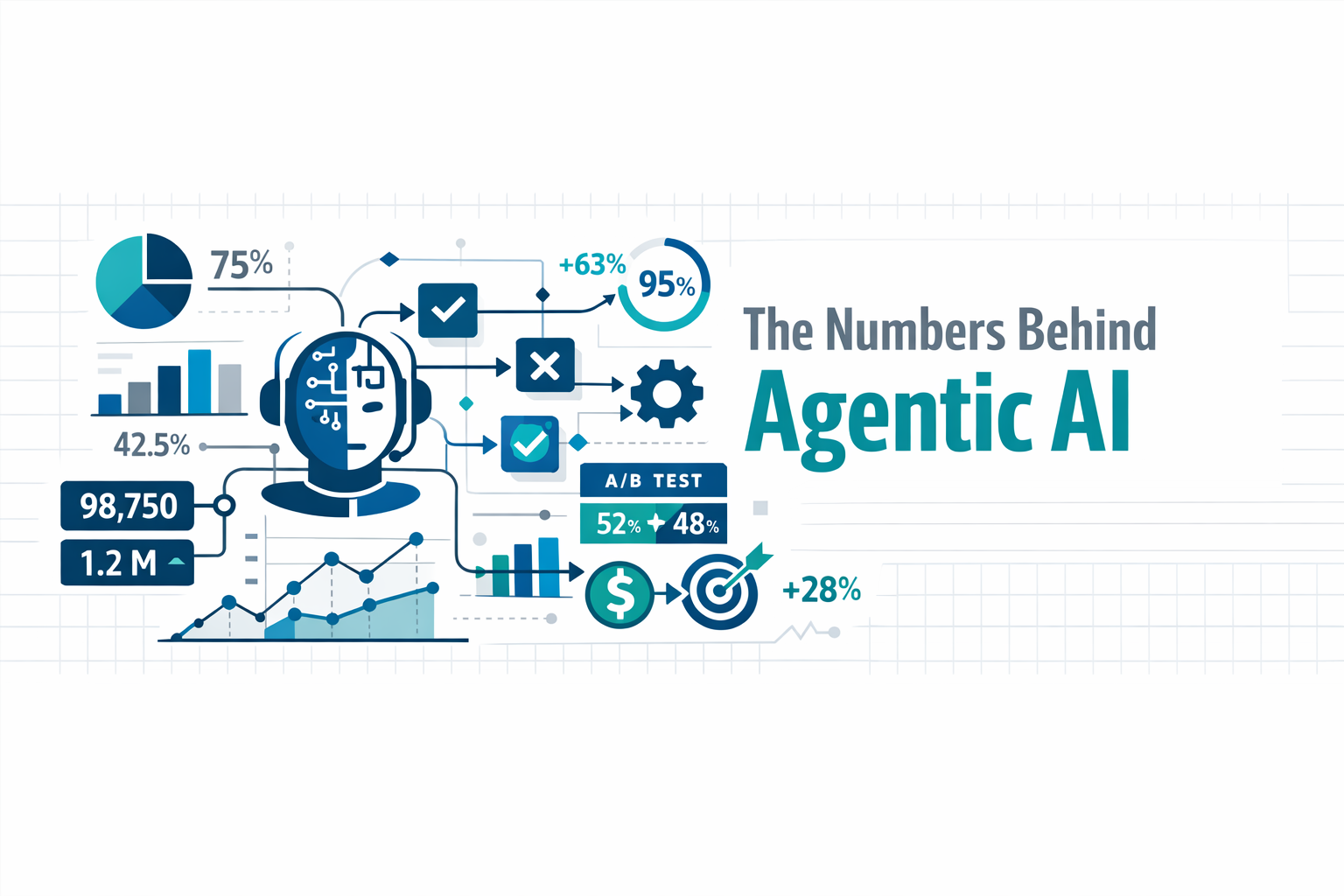
The Numbers Behind Agentic AI
Gartner predicts that 40% of enterprise apps will include task-specific AI agents by the end of 2026—a dramatic leap from less than 5% in 2025. According to Salesforce's 2025 Connectivity Benchmark Report, 93% of IT leaders plan to deploy autonomous agents within two years, and nearly half already have.
How Each Platform Is Responding
| Platform | AI Agent Framework | Autonomous Capabilities |
|---|---|---|
| HubSpot | Breeze Agents | Content, Social Media, Prospecting, Customer agents |
| Salesforce | Agentforce | SDR, Service, Sales Coach, Pipeline Management agents |
| Zoho | Zia Agents + Zia LLM | 40+ pre-built agents across sales, service, marketing |
| Pipedrive | AI Sales Assistant + Agentic Experience | Deal prioritization, email crafting, pipeline insights |
Trend 2: Proprietary LLMs and Privacy-First AI
Not all AI is created equal. In 2026, a significant divide is emerging between platforms that rely entirely on third-party AI models and those building their own—with major implications for data privacy, cost, and customization.
Why Proprietary LLMs Matter
Most SaaS platforms plug in third-party LLMs like ChatGPT or Claude and call it a day. But that approach raises critical concerns:
- Data privacy: Customer data leaves your servers and enters external systems
- Cost control: Per-token pricing adds up at enterprise scale
- Customization: Generic models aren't optimized for specific business workflows
- Compliance: Regulatory requirements like GDPR demand knowing exactly where data is processed
The Privacy-First Approach
Zoho leads this trend most aggressively. Zoho launched Zia LLM—a proprietary large language model trained entirely in-house using Nvidia's infrastructure. Zia LLM comes in three sizes (1.3B, 2.6B, and 7B parameters) and was designed specifically for business use cases: structured data extraction, summarization, retrieval-augmented generation (RAG), and code generation.
Critically, Zoho's AI models are not trained on consumer data and do not retain customer information. This privacy-first philosophy extends across the entire Zoho ecosystem, giving enterprises full control over how their data is used.
Platform Comparison: AI Model Approach
| Platform | AI Model Strategy | Data Privacy Approach | Cost Implications |
|---|---|---|---|
| HubSpot | Leading LLMs + proprietary models | Enterprise-grade security; data stays within HubSpot | AI included in subscription tiers |
| Salesforce | Atlas Reasoning Engine (supports OpenAI, Anthropic, Google Gemini) | Einstein Trust Layer; no customer data used to train models | Agentforce priced as add-on |
| Zoho | Proprietary Zia LLM (1.3B, 2.6B, 7B parameters) | Fully owned tech stack; data never leaves Zoho servers | AI included in app pricing—no hidden per-use fees |
| Pipedrive | OpenAI + proprietary engines | Does not permit third parties to use client data to train models | AI features included in mid-tier plans and above |
Trend 3: No-Code and Low-Code Workflow Automation
The democratization of CRM workflow creation is accelerating in 2026. Business users—not just developers—are now building sophisticated automations that drive revenue and efficiency.
Why This Matters
Previously, complex CRM automations required developers or highly technical users. In 2026, visual workflow builders allow marketing managers, sales directors, and customer success leads to create multi-step automations independently.
What No-Code Enables in CRM
Marketing automations:
- Multi-stage nurture sequences triggered by specific behaviors
- Dynamic content personalization based on customer segments
- Cross-channel campaign orchestration
- A/B testing workflows with automatic optimization
Sales automations:
- Lead routing based on complex criteria (geography, industry, deal size, rep capacity)
- Follow-up sequences with conditional branching
- Pipeline stage-based actions and notifications
- Deal health monitoring and automatic alerts
Service automations:
- Ticket routing and prioritization
- SLA monitoring and escalation
- Customer satisfaction follow-ups
- Knowledge base suggestion workflows
Platform Comparison: No-Code Capabilities
| Capability | HubSpot | Salesforce | Zoho | Pipedrive |
|---|---|---|---|---|
| Visual workflow builder | ✅ Advanced | ✅ Advanced (Flow) | ✅ Advanced | ✅ Basic-Moderate |
| Conditional logic & branching | ✅ | ✅ | ✅ | Limited |
| Multi-step sequences | ✅ | ✅ | ✅ | ✅ |
| Cross-object triggers | ✅ | ✅ | ✅ | Limited |
| AI-suggested automations | ✅ | ✅ | ✅ | ✅ |
| Custom code options | ✅ | ✅ (Apex) | ✅ (Deluge) | ✅ (API) |
| Template library size | Large | Large | Large | Moderate |
| Testing / sandbox | ✅ | ✅ | ✅ | Limited |
Trend 4: Real-Time Data Sync and Composable Ecosystems
Connected CRM platforms that pull and push data in real-time across your entire technology stack are becoming the standard. At the same time, businesses are embracing composable architectures—selecting best-fit tools for specific functions rather than relying on monolithic all-in-one suites.
The Composable CRM Architecture
| Layer | Role | Examples |
|---|---|---|
| Core CRM | Central customer data hub | HubSpot, Salesforce, Zoho CRM, Pipedrive |
| Marketing | Campaigns, automation, content | Mailchimp, Marketo, ActiveCampaign |
| Sales | Prospecting, proposals, contracts | Outreach, Apollo, PandaDoc |
| Service | Support, ticketing, knowledge | Zendesk, Intercom, Freshdesk |
| Data | Analytics, BI, reporting | Tableau, Power BI, Looker |
| Integration | Middleware, iPaaS, sync | Zapier, Make, SyncMatters |
Why Real-Time Sync Matters
| Scenario | Without Real-Time Sync | With Real-Time Sync |
|---|---|---|
| New customer signs up | Data enters CRM hours later | Instantly available across all systems |
| Invoice paid | Finance updates; CRM still shows "pending" | Payment status updates everywhere simultaneously |
| Support ticket opened | Sales unaware of customer issue | Sales notified instantly with full context |
| Lead engages with content | Marketing sees it; sales unaware | Engagement triggers immediate sales notification |
IDC projects that by 2026, nearly half of new CRM-related investment will go into data architecture, AI infrastructure, and analytics rather than extra licenses—signaling that businesses are prioritizing connectivity and intelligence over raw feature count.
Trend 5: Hyper-Personalization at Scale
Personalization in CRM has evolved far beyond "Dear [First Name]." In 2026, hyper-personalization means every interaction is uniquely tailored based on real-time behavioral signals, purchase history, preferences, and predictive insights.
The Personalization Spectrum
| Level | Description | Example |
|---|---|---|
| Basic | Name and company personalization | "Hi Sarah from Acme Corp" |
| Segmented | Content tailored to customer segments | Industry-specific case studies |
| Behavioral | Triggered by specific customer actions | Email sent after 3rd product page visit |
| Predictive | Based on AI predictions of future behavior | Proactive outreach before churn risk increases |
| Hyper-personalized | Unique experience for every individual at every moment | Dynamic content, timing, channel, and offer all optimized per person |
How CRMs Enable Hyper-Personalization
Unified customer profiles: Every touchpoint—website visits, email interactions, purchases, support tickets, social media—feeds into a single, comprehensive customer record that AI continuously enriches.
Real-time behavioral triggers: When a customer exhibits specific behaviors (repeated product page visits, abandoned cart, decreased engagement), the CRM automatically triggers personalized responses.
Predictive next-best-action: Rather than waiting for customers to signal intent, AI identifies the optimal next step for each customer relationship and either surfaces it to the team or executes it automatically.
Dynamic content optimization: AI determines the right message, channel, timing, and offer for each individual customer based on their unique profile and behavioral patterns.
Trend 6: Voice-First and Omnichannel CRM
Customer interactions no longer happen in isolation. In 2026, CRMs must deliver seamless, consistent experiences across every touchpoint—including voice.
Voice CRM: The Next Frontier
Salesforce leads this trend with Agentforce Voice, which delivers natural, human-like conversations that capture a brand's unique tone and personality. With 80% of all inquiries starting by phone, voice-enabled CRM is transforming customer interactions.
Key voice CRM capabilities in 2026:
- Natural language understanding and response generation
- Real-time CRM record updates during conversations
- Brand-consistent voice personality
- Seamless handoff to human agents when needed
- Full conversation transcription and sentiment analysis
- Integration with major contact center platforms
Omnichannel Requirements
| Channel | 2026 Expectation |
|---|---|
| Full sync, tracking, AI-powered drafting | |
| Web Chat | AI-first engagement with human escalation |
| Phone / Voice | AI-powered conversations (emerging standard) |
| SMS / WhatsApp | Automated messaging and lead nurturing |
| Social Media | Monitoring, engagement, and lead capture |
| Video | Meeting logging and AI-powered note-taking |
| In-App / Product | Usage-based triggers and proactive outreach |
Trend 7: Predictive and Prescriptive Analytics
CRM analytics in 2026 have moved beyond reporting what happened. Modern platforms predict what will happen next—and prescribe exactly what to do about it.
The Analytics Evolution
| Type | Question Answered | Example |
|---|---|---|
| Descriptive | What happened? | Monthly sales report |
| Diagnostic | Why did it happen? | Analysis of why Q3 revenue dropped |
| Predictive | What will happen? | Forecasting which deals will close |
| Prescriptive | What should we do? | Recommending optimal pricing for a specific deal |
Key Predictive Capabilities in 2026
Sales forecasting: AI analyzes historical deal data, current pipeline activity, and external signals to produce accurate revenue forecasts—often within 2-3% of actual results.
Churn prediction: Zoho's Zia, for example, can identify and mitigate the risk of customer churn through churn scores. For subscription-based records, Zia also indicates the specific product or service from which a customer might churn.
Lead scoring: AI evaluates leads based on dozens of behavioral and demographic signals, producing scores that accurately predict conversion probability.
Deal win probability: Real-time assessment of each deal's likelihood to close, factoring in engagement levels, competitive dynamics, and historical patterns. Pipedrive's AI Sales Assistant, for instance, analyzes deals to predict win odds and nudges reps toward high-impact moves.
Customer lifetime value prediction: AI estimates the long-term value of each customer relationship, helping teams prioritize investment in high-value accounts.
Trend 8: AI Governance, Trust, and Transparency
As AI takes on more autonomous responsibilities within CRM, the need for governance, transparency, and ethical AI practices becomes paramount.
Why Governance Matters Now
Organizations deploying autonomous AI agents face critical questions:
- How do we ensure AI acts within acceptable boundaries?
- How do we maintain compliance with data privacy regulations?
- How do we audit AI decisions and correct mistakes?
- How do we balance AI efficiency with human oversight?
The AI Governance Framework
Transparency and explainability: Every AI action should come with clear reasoning. HubSpot emphasizes this with predictive lead scoring that includes explainable factors—not a black box—along with automatic data enrichment suggestions accompanied by confidence scores.
Human-in-the-loop controls: Critical decisions require human approval. Salesforce's Einstein Trust Layer ensures no customer data is used to train models, while providing granular control over agent behavior through prompt engineering and permission settings.
Audit trails: Every AI action must be logged, traceable, and auditable. Salesforce's Agentforce provides full auditability through Data 360, tracking every action taken by AI agents across the platform.
Regulatory compliance: The EU AI Act, becoming fully applicable in mid-2026, requires strict transparency regarding training data used for autonomous agents. This will significantly impact how CRM platforms deploy and document their AI capabilities.
Platform Governance Comparison
| Governance Feature | HubSpot | Salesforce | Zoho | Pipedrive |
|---|---|---|---|---|
| AI action logging | ✅ | ✅ (Data 360) | ✅ | ✅ |
| Explainable AI | ✅ Confidence scores | ✅ Einstein Trust Layer | ✅ | Limited |
| Human approval controls | ✅ | ✅ | ✅ | ✅ |
| Data privacy (no external training) | ✅ | ✅ | ✅ (owns LLM) | ✅ |
| GDPR / compliance tools | ✅ | ✅ | ✅ | ✅ |
| Sandbox / testing environment | ✅ | ✅ | ✅ | Limited |
Trend 9: Mobile and Offline-First CRM
With remote and field-based work becoming standard, CRM platforms must deliver full functionality on mobile devices—even without internet connectivity.
The Mobile-First Imperative
Around 81% of users access their CRM from multiple devices, and mobile access has become a baseline expectation rather than a premium feature.
Critical mobile capabilities in 2026:
- Full offline functionality with automatic sync on reconnect
- Voice-driven interaction for hands-free updates
- Location-based intelligence surfacing nearby prospects
- Business card and document scanning
- AI-powered activity logging reducing manual input
- Biometric authentication for security
Mobile Feature Comparison
| Feature | HubSpot | Salesforce | Zoho | Pipedrive |
|---|---|---|---|---|
| Full mobile app | ✅ | ✅ | ✅ | ✅ |
| Offline mode | ✅ | ✅ | ✅ | ✅ |
| Voice input | ✅ | ✅ | ✅ | ✅ |
| Business card scanning | ✅ | ✅ | ✅ | ✅ |
| Location-based features | Limited | ✅ | ✅ | Limited |
| AI-powered notes | ✅ | ✅ | ✅ | ✅ |
| Biometric login | ✅ | ✅ | ✅ | ✅ |
Trend 10: Agent-to-Agent Collaboration
Perhaps the most forward-looking trend in CRM for 2026 is the emergence of AI agents that don't just work independently—they collaborate with each other and with agents on other platforms.
What Is Agent-to-Agent Collaboration?
As businesses deploy multiple AI agents across different systems and functions, the ability for these agents to communicate, hand off tasks, and coordinate becomes critical.
Real-world example: A marketing AI agent identifies a high-value lead and hands it off to a sales prospecting agent, which researches the prospect and drafts personalized outreach. If the prospect responds, a customer service agent is on standby to handle questions—all without human intervention at any stage.
The Emerging Standards
Zoho's A2A Protocol: Zoho has announced support for the Agent2Agent (A2A) protocol, enabling Zia Agents to interact and collaborate with each other as well as with agents on other platforms. This open-standard approach positions Zoho at the forefront of inter-agent communication.
Salesforce's Agent Ecosystem: Salesforce's Agentforce Builder allows teams to build, test, and refine agents in a single workspace. Every agent compiles into a portable JSON file, enabling versioning, sharing, and collaboration between agents across the platform.
HubSpot's Breeze Marketplace: HubSpot's Breeze marketplace allows discovery and deployment of both HubSpot-built agents and custom assistants, creating an ecosystem where agents can be combined and orchestrated for complex workflows.
Agent Collaboration Maturity
| Platform | Agent Collaboration Capability | Inter-Platform Support |
|---|---|---|
| HubSpot | Agents work within Breeze ecosystem | Via marketplace integrations |
| Salesforce | Agentforce Builder with portable agents | Via APIs and partner ecosystem |
| Zoho | A2A protocol support announced | Cross-platform agent collaboration planned |
| Pipedrive | AI agents within sales workflow | Via 500+ marketplace integrations |
Platform Deep Dives
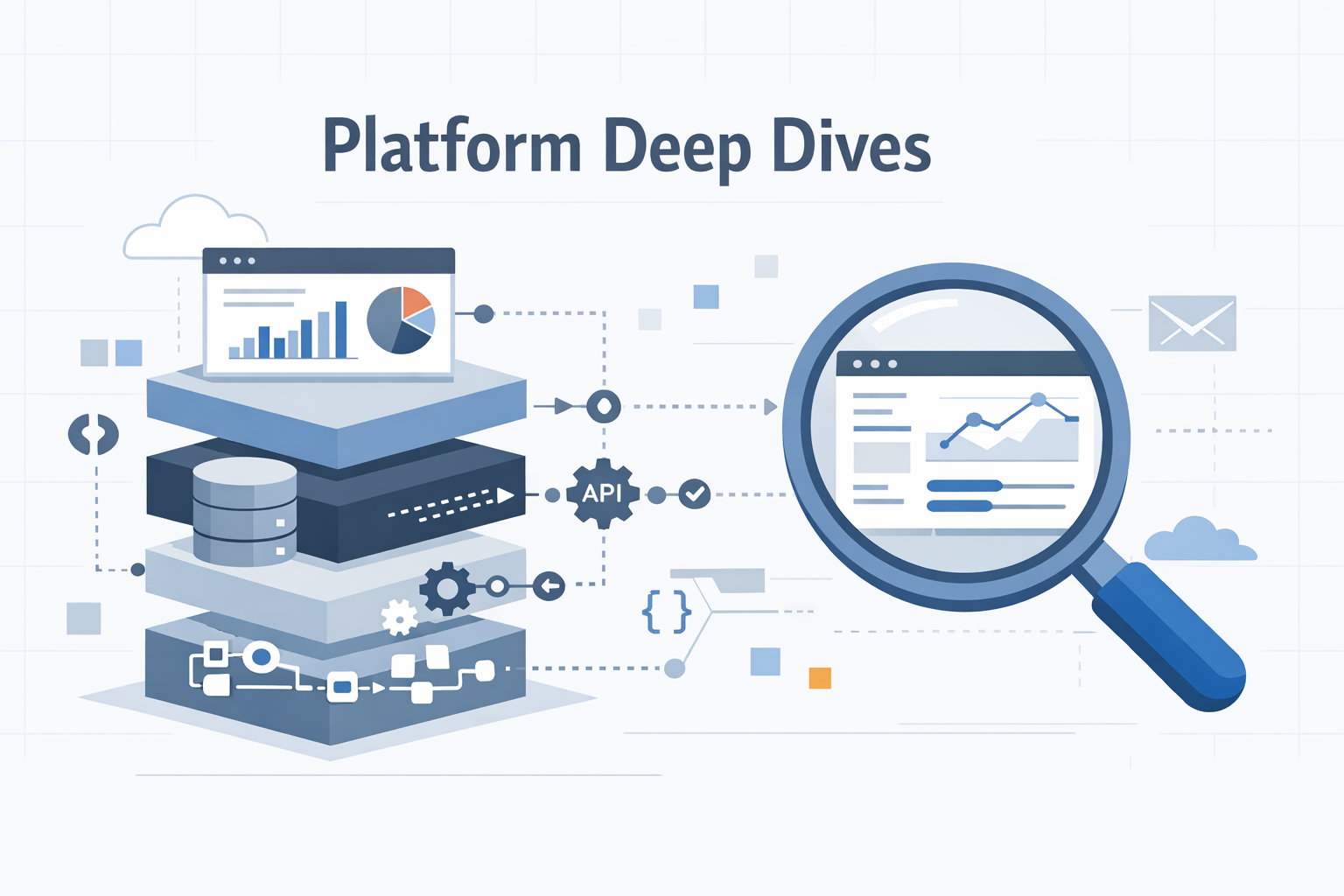
HubSpot: The AI-Orchestrated Growth Platform
Strategic direction: HubSpot is evolving from an AI-assisted CRM into an AI-orchestrated growth platform. The focus is on AI that designs, recommends, and executes go-to-market actions with increasing autonomy.
The Breeze AI Ecosystem: HubSpot's AI platform consists of three layers:
- Breeze Assistant: An AI companion with full access to CRM data and business context. It pulls from Google Workspace, Microsoft 365, and Slack alongside CRM data for complete context, and remembers preferences, brand voice, and working style over time.
- Breeze Agents: Specialized AI teammates that run full workflows autonomously:
- Content Agent — Generates blog posts, landing pages, and marketing content
- Social Media Agent — Monitors mentions, suggests responses, schedules posts
- Prospecting Agent — Researches prospects and crafts personalized outreach emails using brand voice and CRM insights
- Customer Agent — Fields customer questions by searching the knowledge base and escalates when needed
- Breeze Intelligence: Real-time data enrichment with buyer intent scoring, using reverse-IP lookup and web behavior tracking to identify companies showing purchase signals.
Key strengths:
- AI embedded natively across all Hubs (Marketing, Sales, Service, Content)
- Breeze marketplace for discovering and deploying agents
- Breeze studio for managing and customizing all AI agents
- Strong emphasis on transparency—users see why AI made each recommendation
- Free tier available; advanced AI in Professional and Enterprise editions
Best for: Mid-market businesses wanting an all-in-one platform with growing AI capabilities, teams prioritizing ease of use and fast time-to-value, and organizations seeking strong marketing automation alongside CRM.
Salesforce: The Agentic Enterprise
Strategic direction: Salesforce is the most aggressive in pushing autonomous AI execution at enterprise scale. Agentforce is positioned as the defining innovation of 2026—an autonomous AI layer that sits atop the entire Salesforce stack.
Agentforce Capabilities:
- Agentforce SDR: AI-powered sales development rep that sends intro emails, follows up on cold leads, handles objections, and schedules meetings automatically. It contextually adapts outreach based on industry-specific sales signals.
- Agentforce for Sales: Monitors pipeline health, follows up on stalled deals, schedules meetings, updates opportunity stages, and drafts outreach emails.
- Agentforce Voice: Delivers natural, human-like phone conversations with brand-consistent tone. Achieves near-human conversational flow while executing actions like updating CRM records and triggering workflows—with full auditability.
- Agentforce for Service: Handles Tier-1 and Tier-2 customer inquiries autonomously, resolving issues and updating records while escalating complex cases.
- Agentforce Builder: A single workspace for building, testing, and refining agents. Users can start with AI guidance, then refine in document-like editor, low-code canvas, or pro-code script view.
- Agent Script: A new scripting language combining AI creativity with code predictability, enabling conditional logic, precise tool use, and deterministic controls.
Atlas Reasoning Engine: Salesforce's reasoning engine now supports multiple AI models—OpenAI, Anthropic (on Amazon Bedrock), and Google Gemini—giving enterprises flexibility in choosing which models power their agents.
Key strengths:
- Most advanced autonomous AI capabilities in the market
- Einstein Trust Layer ensuring enterprise-grade AI governance
- Agentforce Voice leading the voice CRM revolution
- Massive AppExchange ecosystem (5,246+ apps)
- Spring '26 release brings even more agent capabilities
- Integration with ChatGPT allowing Salesforce record management from within ChatGPT
Best for: Large enterprises with complex sales operations, organizations requiring advanced AI governance, and companies needing the most autonomous CRM capabilities available.
Zoho: Unified Intelligence and Digital Employees
Strategic direction: Zoho is taking a fundamentally different approach—building AI from the ground up with a privacy-first, cost-efficient philosophy. The launch of Zia LLM and 40+ pre-built Zia Agents positions Zoho as the leader in democratizing AI across the entire business.
Zia LLM: Zoho's proprietary large language model, trained entirely in-house using Nvidia's infrastructure. It comes in three sizes (1.3B, 2.6B, 7B parameters) optimized for business use cases. Critically, it runs on Zoho's own infrastructure—customer data never leaves their servers and is never used to train models.
Zia Agents: 40+ pre-built AI agents available through the Zia Agents Marketplace, plus a fully no-code Zia Agent Studio for building custom agents:
- Sales Development Agent — Automatically scores leads, predicts deal probability, and suggests next actions
- Virtual SDR — Nurtures and qualifies leads through targeted emails, handles objections, and schedules meetings
- Sales Coach — Trains sales reps, tests knowledge, and offers personalized feedback based on role plays or real-time deals
- Customer Service Agent — Processes incoming requests, understands context, and either answers directly or triages to human reps
- Loss Analysis Agent — Analyzes unsuccessful deals and provides reports outlining primary reasons for each loss
- Data Enrichment Agent — Gathers additional details about leads and customers from the internet
Zia Agent Studio: A fully prompt-based, no-code agent builder with access to over 700 actions across Zoho's products. Users can create agents via drag-and-drop, assign jobs, define rules, provide knowledge, and grant access to tools—all without coding.
Key strengths:
- Proprietary LLM ensures maximum data privacy
- AI included in app pricing with no hidden per-use fees
- Broadest suite of pre-built agents (40+)
- End-to-end owned tech stack
- A2A protocol support for cross-platform agent collaboration
- Unified data model across 50+ Zoho apps
Best for: Value-driven businesses of all sizes, organizations prioritizing data privacy and compliance, and companies wanting comprehensive AI across every business function without enterprise pricing.
Pipedrive: Sales-First AI and Pipeline Mastery
Strategic direction: Pipedrive is doubling down on what it does best—making sales intuitive and effective—and wrapping it with increasingly capable AI. The platform unveiled its AI agentic experience in early 2025, positioning a network of intelligent agents as digital teammates for sales teams.
Pipedrive AI Capabilities:
- AI Sales Assistant: Continuously analyzes sales pipelines and activities to predict win probability and recommend next steps. Provides real-time suggestions for high-win-probability deals while deprioritizing lower-chance opportunities.
- Smart Email Creation: Crafts personalized emails from simple prompts using CRM data. The proactive agent autonomously writes personalized email content to move deals forward, summarizes past threads, and explains why certain wording is recommended.
- Email Summarization: Condenses email threads into brief summaries for quick decision-making and reduced information overload.
- Pulse (AI-Driven Prospecting): An AI-driven solution designed to streamline prospecting and prioritize the most promising deals based on behavioral signals.
- AI-Powered Reporting: Enables users to generate customized sales reports via natural language text input—no complex setup required.
- Daily Snapshots: Delivers daily insights on pipeline health, flagging deals that need attention and highlighting top-performing reps.
- Lead Scoring: Sorts leads by interest and demographics, helping teams pursue the highest-likelihood conversions first.
Agentic Vision: Pipedrive's CEO described the vision as "a CRM that gives time back to salespeople by cutting out tedious tasks and pulling together data from every corner of the sales lifecycle. Powered by a network of intelligent AI agents, the platform not only supports sales management but actively works alongside teams."
Key strengths:
- Best-in-class visual pipeline interface
- Sales-first design built by salespeople
- Affordable entry pricing ($14/user/month)
- 500+ integrations via Pipedrive Marketplace
- Strong data privacy—no client data used to train AI models
- Intuitive enough for teams with minimal CRM experience
Best for: Sales-focused SMBs and growing teams wanting intuitive pipeline management with AI assistance, startups needing affordable CRM with smart features, and teams prioritizing ease of use above all else.
Master Platform Comparison
| Feature / Trend | HubSpot | Salesforce | Zoho | Pipedrive |
|---|---|---|---|---|
| AI Agent Framework | Breeze Agents (4 core) | Agentforce (multiple types) | Zia Agents (40+ pre-built) | AI Sales Assistant + Agentic Experience |
| Autonomous Execution | Growing | Most advanced | Strong | Suggestion-focused, evolving |
| Proprietary LLM | No (uses leading LLMs) | No (Atlas Engine, multi-model) | ✅ Yes (Zia LLM) | No (uses OpenAI) |
| No-Code Automation | Advanced | Advanced (Flow) | Advanced | Basic-Moderate |
| Integration Ecosystem | 1,900+ apps | 5,246+ apps (AppExchange) | 700+ actions + 50 apps | 500+ integrations |
| Voice CRM | Emerging | ✅ Agentforce Voice | Telephony integration | Third-party integration |
| Predictive Analytics | Good | Advanced (Einstein) | Strong (Zia) | Deal win probability |
| AI Governance | Explainable + logging | Einstein Trust Layer | Privacy-first + own LLM | Basic controls |
| Mobile Experience | Strong | Strong | Strong | Strong |
| Agent Collaboration | Breeze Marketplace | Agentforce Builder | A2A Protocol | Via integrations |
| Data Privacy | Enterprise-grade | Einstein Trust Layer | Owns entire tech stack | No third-party training |
| Free Tier | ✅ Yes | Limited | ✅ Yes (3 users) | No (14-day trial) |
| Entry Pricing | Free | $25/user/month | Free | $14/user/month |
| Best For | Mid-market, all-in-one | Enterprise, complex needs | SMB, value + privacy | Sales-focused teams |
Which CRM Is Right for Your Business in 2026?
Choosing the right CRM is no longer about features alone. In 2026, the decision hinges on your business size, growth trajectory, AI needs, privacy requirements, and integration complexity.
Decision Framework
| Business Profile | Recommended Platform | Why |
|---|---|---|
| Early-stage startup (< 10 people) | Pipedrive or Zoho | Affordable, intuitive, strong AI features at low cost |
| Growing SMB (10-50 people) | HubSpot or Zoho | All-in-one capabilities, ease of use, strong marketing tools |
| Mid-market (50-500 people) | HubSpot or Salesforce | Robust automation, integration ecosystem, scalable architecture |
| Enterprise (500+ people) | Salesforce | Most advanced AI, enterprise governance, largest app ecosystem |
| Privacy-sensitive industries | Zoho | Proprietary LLM, data never leaves their servers, full stack ownership |
| Sales-heavy teams | Pipedrive | Best pipeline UX, sales-first design, intuitive AI assistant |
| Marketing-driven growth | HubSpot | Best-in-class marketing hub, content tools, lead generation |
| Government / regulated | Salesforce or Zoho | Enterprise compliance, audit trails, data residency controls |
| Global operations | Salesforce or Zoho | Multi-currency, multi-language, international compliance |
| Budget-conscious with full features | Zoho | Most comprehensive suite at the lowest price point |
Questions to Ask Before Choosing
About AI:
- How much autonomous execution do you need vs. AI-assisted recommendations?
- Is data privacy a top concern? Do you need your AI to run on your own infrastructure?
- Do you need explainable AI with confidence scores?
About Integration:
- How many systems do you currently use that need to connect to your CRM?
- Do you need real-time sync or is scheduled sync acceptable?
- Will you need custom integrations for proprietary systems?
About Scale:
- Where do you expect to be in 2-3 years?
- Will your CRM needs grow with new teams, products, or markets?
- Do you need multi-entity or multi-region support?
About Support:
- What level of onboarding support do you need?
- How important is a self-service knowledge base vs. live support?
- Do you need dedicated customer success management?
The Role of Integration Partners
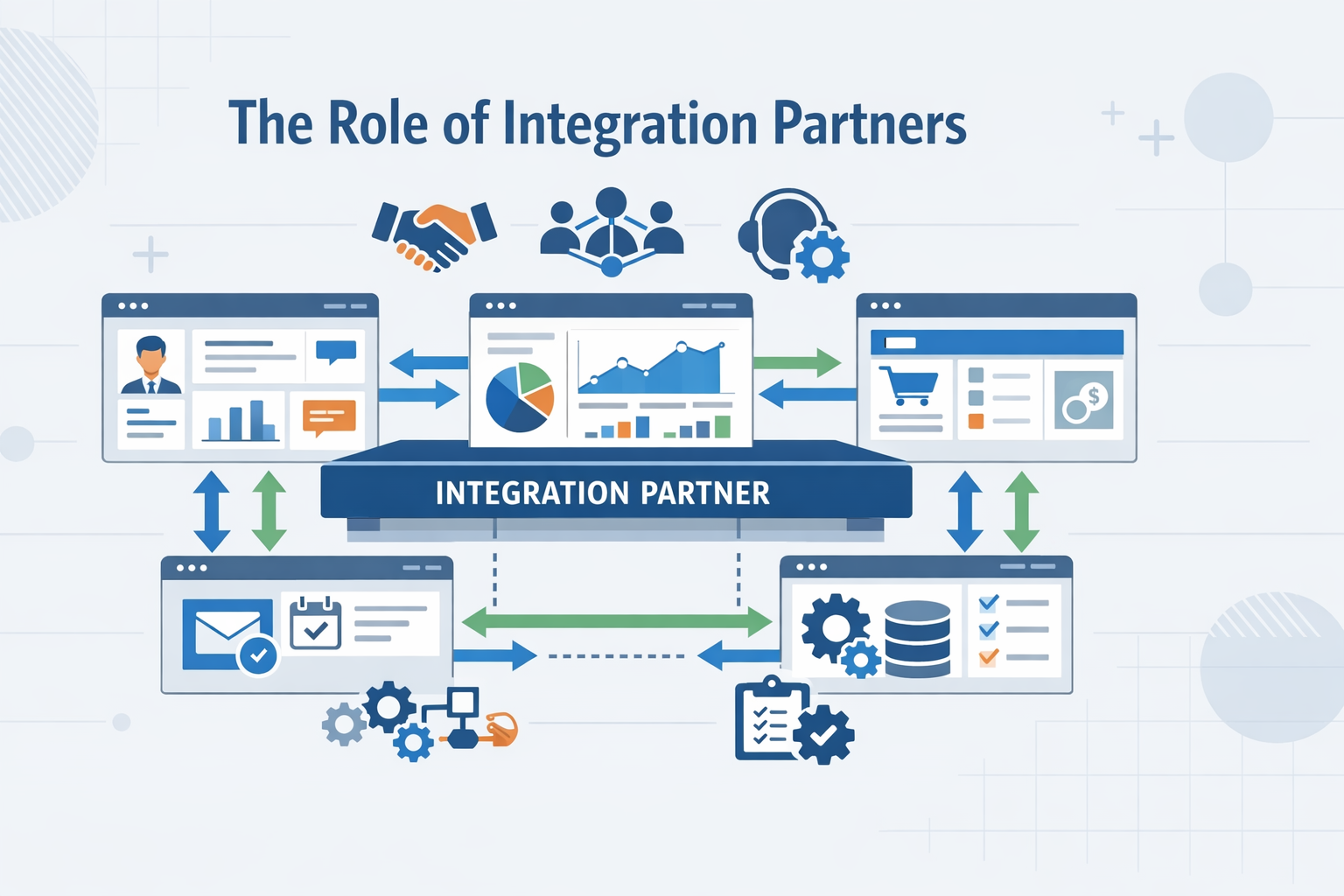
No matter which CRM you choose, maximizing its value in 2026 requires seamless integration with your broader technology stack. This is where integration partners become critical.
Why Integration Partners Matter More Than Ever
The shift toward composable CRM ecosystems means businesses are connecting more tools than ever before. But connecting tools is only half the battle—ensuring data flows correctly, workflows trigger properly, and systems stay synchronized requires expertise.
SyncMatters specializes in connecting CRM platforms with the rest of your technology stack. As an Elite HubSpot partner with experience across Salesforce, Zoho, and other leading platforms, SyncMatters delivers:
- Custom Integrations — Middleware connecting your CRM to ERP, accounting, project management, and proprietary systems
- CRM Migrations — Expert-led data migration when switching or consolidating CRM platforms
- HubSpot Services — Implementation, onboarding, integration, and optimization for HubSpot
- Case Studies — Real examples of successful CRM integrations across industries
- ROI Calculator — Quantify the value of CRM integration for your business
When to Work with an Integration Partner
| Scenario | DIY Feasible? | Partner Recommended? |
|---|---|---|
| Basic CRM setup with native integrations | ✅ Yes | Optional |
| Connecting 3-5 systems with pre-built connectors | Maybe | Recommended |
| Custom middleware for proprietary systems | ❌ No | Essential |
| CRM migration from legacy platform | ❌ No | Essential |
| Complex multi-system architecture | ❌ No | Essential |
| AI agent configuration and optimization | Maybe | Recommended |
| Scaling integrations across growing tech stack | Maybe | Recommended |
Conclusion
The CRM landscape in 2026 is defined by a single word: intelligence. Every major platform is racing to deliver AI that doesn't just assist—it acts, predicts, and learns autonomously.
The Key Takeaways
1. Agentic AI is no longer optional.
By the end of 2026, businesses without AI agents in their CRM will be at a significant competitive disadvantage in lead qualification, customer service, and pipeline management.
2. Privacy and governance are differentiators.
As AI becomes more autonomous, how platforms handle your data becomes as important as what they can do with it. Zoho's proprietary LLM and Salesforce's Trust Layer represent two valid approaches to this critical challenge.
3. Composability is the future.
No single platform will do everything perfectly. The winning strategy is a core CRM connected to best-fit tools through robust middleware and real-time data sync.
4. The integration layer is critical.
The value of any CRM is multiplied by how well it connects to the rest of your business. Integration partners and middleware platforms are no longer nice-to-haves—they're essential infrastructure.
5. Choose based on outcomes, not features.
In 2026, the right CRM isn't the one with the most features. It's the one that delivers the best business outcomes for your specific needs, team, and growth trajectory.
Your Next Steps
- Evaluate your current CRM against the trends and capabilities outlined in this article
- Identify gaps in AI, integration, personalization, and analytics
- Compare platforms using the decision framework above
- Consult with an integration partner to understand what's possible with your existing tech stack
- Start a trial of your top candidates and measure against your specific success metrics
Contact SyncMatters to discuss how integrated CRM workflows can transform your business in 2026.
Explore more resources:
- Custom integration solutions
- CRM migration platform
- HubSpot services and onboarding
- Integration case studies
- Latest insights on our blog

.png)